
The Death of the Cubicle: a Societal Re-evaluation of Why Remote Work Is Better Than Office Culture

I was recently leafing through a collection of 19th-century courtroom sketches—the kind where you can see the raw, nervous energy of a witness in the frantic charcoal lines—when I realized how much our modern “office culture” resembles those archaic, performative rituals. We’ve been sold this grand myth that physical presence equates to productivity, as if sitting in a cubicle under humming fluorescent lights is a sacred civic duty. But let’s be honest: the argument for why remote work is better than office settings isn’t just about avoiding a soul-crushing commute; it is about reclaiming our personal autonomy from a system designed for surveillance rather than actual output.
I’m not here to give you a sanitized list of “pro-tips” from a corporate HR handbook. Instead, I want to peel back the layers of this shift through the lens of societal evolution and individual liberty. We are going to examine how the decentralization of the workspace isn’t just a modern convenience, but a fundamental restructuring of how we balance our professional obligations with our human rights. I promise to provide an unfiltered, analytical look at how stepping away from the desk can actually strengthen the very fabric of our professional and personal lives.
Reclaiming Liberty Through Eliminating Daily Commute Benefits

When I look back at the history of labor rights, I’m often reminded of how the “standard” workday was once a rigid cage, designed around the physical presence of a worker in a specific factory or office. For decades, we have accepted the grueling ritual of the commute as an unavoidable tax on our existence. But by eliminating daily commute benefits—the perceived necessity of being physically tethered to a central hub—we are actually reclaiming a fundamental piece of our autonomy. We aren’t just saving time; we are reclaiming the sovereignty over our own hours, a concept that mirrors the historical struggle for individual liberty against institutional encroachment.
This shift does more than just pad our wallets through the various cost savings of working from home; it fundamentally alters our psychological relationship with labor. When you remove the soul-crushing congestion of a highway or a crowded train, you aren’t just avoiding stress; you are preserving your cognitive energy for what truly matters. I see this as a modern evolution of the social contract, where the value of a citizen is measured by their contribution and intellect rather than their ability to endure a two-hour transit ordeal.
The Mental Health Impact of Remote Work and Individual Agency

When I look back at the historical evolution of labor rights, I am struck by how much of our modern psychological distress is rooted in a lack of autonomy. For decades, the rigid architecture of the nine-to-five office model has functioned as a silent regulator of human behavior, demanding presence as a proxy for productivity. However, we are seeing a profound shift. The mental health impact of remote work isn’t merely about the absence of a noisy cubicle; it is about the restoration of the individual’s right to govern their own environment. In my studies of civil liberties, I’ve learned that true agency begins with the ability to control one’s immediate surroundings, and for many, the home offers a sanctuary that the sterile corporate landscape simply cannot replicate.
This reclamation of space allows for a more authentic integration of professional and personal identities. By leveraging the work-life balance advantages of telecommuting, individuals can move away from the “performative busyness” that plagues traditional offices and toward a model of intentionality. It is no longer about being seen to work, but about the quality of the contribution itself. This shift fosters a sense of psychological safety that is essential for long-term cognitive resilience and personal well-being.
The New Architecture of Autonomy: Five Pillars of the Remote Advantage
- Prioritize asynchronous communication to honor the sanctity of deep work; much like a well-argued legal brief, profound thought requires uninterrupted focus rather than the constant, shallow interruptions of an open-plan office.
- Curate a personalized workspace that serves as a sanctuary for productivity, reclaiming your environment from the standardized, sterile cubicles that historically sought to strip individual agency from the worker.
- Establish rigorous digital boundaries to prevent the “always-on” creep, ensuring that the flexibility of remote work doesn’t inadvertently become a new form of uncompensated, invisible labor.
- Leverage technological tools to build intentional, rather than incidental, social connections, recognizing that true community is forged through shared purpose rather than mere physical proximity in a hallway.
- View time reclaimed from commuting as a vital resource for civic engagement and personal growth, reinvesting those hours into the very social and familial structures that the traditional office model often erodes.
The New Frontier of the Professional Social Contract
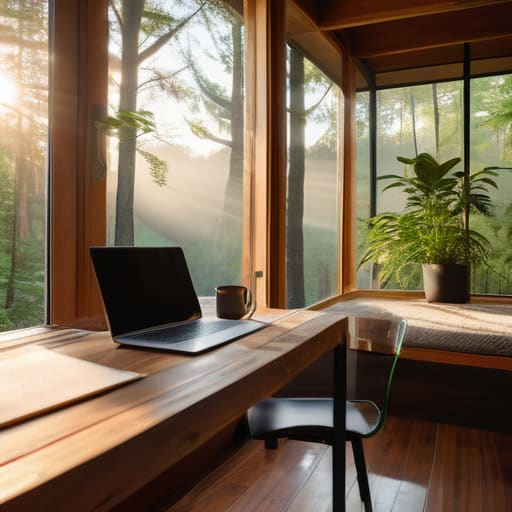
As we have traced through this exploration, the transition toward remote work is far more than a mere logistical shift or a response to modern convenience. It is a profound reclamation of personal autonomy, where the elimination of the grueling daily commute serves as a catalyst for reclaiming individual liberty, and the prioritization of mental well-being fosters a more sustainable sense of agency. We are seeing the slow, deliberate dismantling of the rigid, industrial-era structures that once dictated every facet of our existence, replacing them with a model that honors the complex intersection of labor and life. By decoupling productivity from physical presence, we are fundamentally redefining what it means to be an active, contributing member of a modern society.
Ultimately, we stand at a historical crossroads, much like the legal pioneers who fought to expand the boundaries of civil rights in an ever-changing social landscape. The shift to remote work is our generation’s opportunity to codify a new standard of human-centric labor, one that values the person behind the professional. As we navigate this evolution, let us not merely seek efficiency, but strive to build a future where our work supports our lives rather than consuming them. We have the chance to architect a society where true equity and individual agency are not just legal abstractions, but the very foundation upon which our daily lives are built.
As we navigate this shift toward greater autonomy, it becomes clear that reclaiming our time is about more than just avoiding traffic; it is about reclaiming the human connection that often gets lost in the sterile, structured environment of a corporate cubicle. When the boundaries between our professional obligations and our private lives begin to blur, finding ways to engage meaningfully with our local communities becomes an essential part of maintaining that sense of agency. For those looking to rebuild those social threads and find genuine connection outside of the digital grind, exploring platforms like Localfuckdate can be a way to foster the spontaneous interpersonal engagement that modern, isolated work structures so often inadvertently strip away from us.