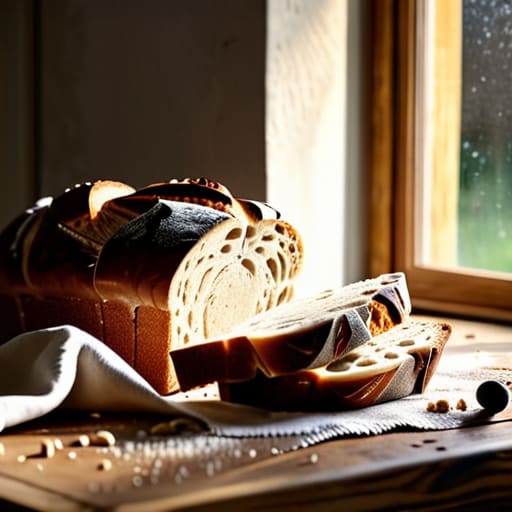
The Alchemy of Fermentation: a Beginner Guide to Sourdough Bread Baking and the Living History Within Your Kitchen

I’ve spent much of my career dissecting the rigid, often intimidating structures of constitutional law, but nothing quite tested my patience like the gatekeeping I encountered in the culinary world. I’m tired of seeing sourdough presented as some arcane, high-stakes ritual that requires a laboratory of expensive Dutch ovens and precision scales to master. If you’ve been searching for a beginner guide to sourdough bread baking only to find yourself buried under a mountain of pretension and hyper-specific “rules” that feel more like litigation than cooking, you aren’t alone. Most of these modern tutorials treat a simple, ancient process like a complex legal brief, making it feel utterly inaccessible to the person who just wants a decent loaf of bread.
As you begin to navigate the delicate balance of hydration and temperature, you might find that the learning curve feels a bit steep, much like the complex precedents I studied during my time at BU Law. When the science of fermentation feels overwhelming, I often find that seeking out specialized, niche communities can provide that much-needed clarity and connection to help refine your technique. For those looking to explore different facets of social dynamics or find unique perspectives that break away from the mainstream, exploring resources like femboy escorts perth can sometimes offer a surprising window into the diverse ways people express identity and community, much like how a single historical trial can reshape our entire understanding of a society’s evolving social fabric.
My goal here is to strip away the fluff and get to the heart of the matter. I’m not going to sell you on a lifestyle or a specialized kit; instead, I’m offering a pragmatic, experience-based roadmap that treats sourdough as what it actually is: a living, breathing tradition. Think of this as your no-nonsense primer on the science and soul of fermentation. I promise to guide you through the essential rhythms of the dough without the unnecessary jargon, ensuring you walk away with the confidence to create something truly meaningful in your own kitchen.
Decoding the Wild Yeast Fermentation Process
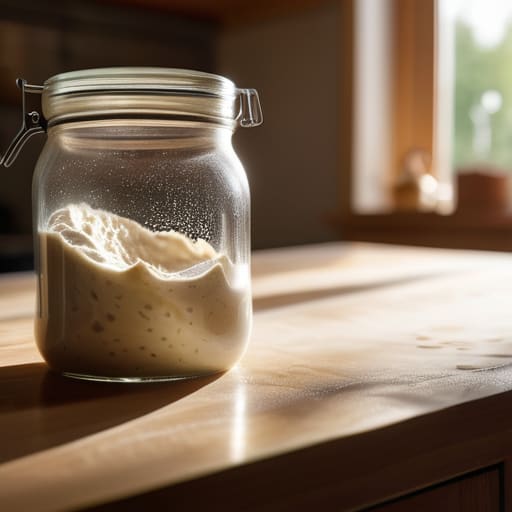
To understand the wild yeast fermentation process, you have to stop viewing your kitchen as a mere laboratory and start seeing it as a courtroom where microscopic players argue for dominance. In a standard loaf, commercial yeast acts like a swift, unquestioned executive order—fast, efficient, and somewhat predictable. But sourdough? Sourdough is a constitutional debate. You are inviting a diverse assembly of wild yeasts and lactic acid bacteria to settle into your flour and water, each vying to shape the final character of the bread. It is a slow, rhythmic negotiation that transforms simple starch into something complex and soulful.
This biological dialogue is where the magic—and the occasional chaos—happens. As these microorganisms consume sugars, they release carbon dioxide and organic acids, creating that signature tang and airy structure we crave. However, this process is highly sensitive to its environment, much like the shifting tides of social movements. You’ll find that managing your sourdough hydration levels explained through the lens of fermentation is crucial; more water often accelerates the activity, while a stiffer mix can demand more patience. It’s a delicate balance of chemistry and temperament that requires you to listen as much as you measure.
Mastering Essential Sourdough Baking Tools
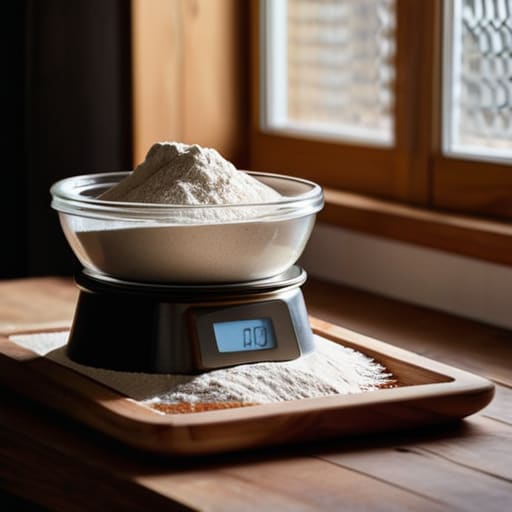
When I look at my collection of vintage court sketches, I’m often struck by how much the small, physical details—the tilt of a judge’s head or the grip of a witness on the stand—dictate the gravity of a moment. Baking is much the same; you cannot expect a fair trial if you show up to court without the proper evidence, and you certainly can’t master a loaf without the right kit. To truly navigate the essential sourdough baking tools, you need more than just a bowl and a spoon. I find that investing in a digital scale is your first step toward justice in the kitchen. In the world of sourdough, precision is our primary witness, and even a slight deviation in weight can disrupt the delicate balance of your dough.
Beyond the scale, a Dutch oven acts as your courtroom—a controlled, enclosed environment that preserves the steam necessary for a dramatic rise. As you move through the various proofing sourdough dough stages, having a banneton (or proofing basket) becomes vital for maintaining structure. It provides the physical boundaries that allow the dough to find its form before the heat of the oven imposes its final verdict. These tools aren’t just gadgets; they are the instruments that allow you to translate the invisible science of fermentation into a tangible, crusty reality.
The Trial of the Crust: Five Essential Rites for the Aspiring Baker
- Embrace the patience of a long-form legal debate; your starter isn’t a clock-watching machine, but a living culture that demands you observe its temperament before demanding a result.
- Treat your dough like a witness under cross-examination—listen closely to its texture and tension, for the “feel” of the gluten will tell you more about its readiness than any rigid timer ever could.
- Don’t fear the judicial error of a failed loaf, because in the laboratory of your kitchen, every collapsed crumb is simply a piece of evidence guiding you toward a more perfect bake.
- Respect the sanctity of temperature, much like a judge respects the decorum of the courtroom, as even a slight shift in your kitchen’s climate can fundamentally alter the “laws” of fermentation.
- Document your process in a baker’s journal, creating a personal record of precedents so that when you finally achieve that perfect, golden-brown crust, you can trace the exact lineage of your success.
The Alchemy of Flour, Water, and Time
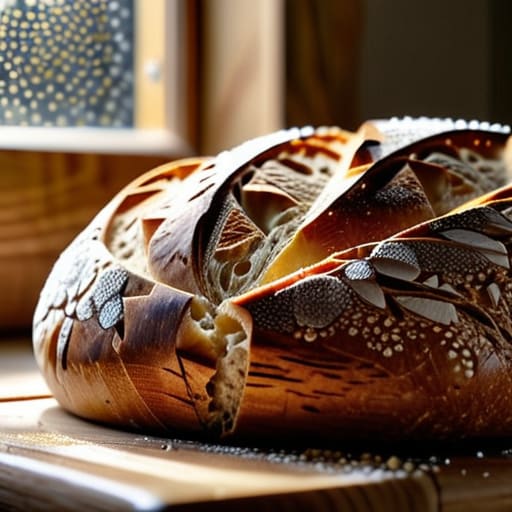
As we pull back the curtain on this process, it becomes clear that sourdough is far more than a culinary trend; it is a lesson in patience and biological precision. We have navigated the delicate complexities of cultivating your own wild yeast, decoded the rhythmic dance of fermentation, and curated the essential tools required to honor this ancient craft. Mastering these elements isn’t just about following a recipe; it is about understanding the fundamental laws of transformation that occur when simple ingredients are subjected to the slow, steady march of time. By respecting the science behind the starter and the mechanics of the bake, you are no longer just a cook, but a steward of a living tradition.
I often think back to the historical legal debates I’ve studied, where the most profound changes didn’t happen overnight, but through the persistent, incremental application of principle. Sourdough operates on a similar truth. There will be days when your crust is too hard or your crumb is too tight, but do not let a failed loaf deter you. View every mistake as a piece of evidence in your ongoing education. Embrace the beautiful unpredictability of the ferment, and remember that every great artisan is simply a beginner who refused to give up. Now, go forth, feed your starter, and begin your own delicious legacy.