
Drinking From Air: Building an Atmospheric Water Capture Rig

I was standing in a dusty courtyard in a drought-stricken corner of the Southwest last summer, watching a local activist struggle with a piece of equipment that looked more like a science fiction prop than a life-saving tool. Everyone talks about the “magic” of pulling water from thin air, but the frustrating truth is that most people treat an Atmospheric Water Capture Rig like a plug-and-play appliance, ignoring the complex reality of humidity gradients and energy efficiency. We’ve been sold this myth of effortless abundance, yet without understanding the fundamental mechanics of how these systems interact with their environment, you’re essentially just building an expensive, glorified dehumidifier that will fail you when you need it most.
In this guide, I’m stripping away the high-tech jargon and the marketing hype to give you a blueprint built on practical reality. I won’t just show you how to assemble an Atmospheric Water Capture Rig; I’m going to walk you through the essential calibrations and environmental assessments required to ensure your system actually delivers sustainable, reliable hydration. Whether you are looking at this through the lens of personal survival or community resilience, you’ll walk away with the no-nonsense technical knowledge needed to turn a theoretical concept into a working reality.
Table of Contents
- Step-by-Step Instructions
- Mastering Dew Point Optimization for Resource Equity
- From Humidity Harvesting Systems to Potable Water Purification Stages
- The Architect’s Checklist: Navigating the Legal and Practical Nuances of Water Harvesting
- The Human Element: Why We Must Look Beyond the Hardware
- The New Frontier of Resource Sovereignty
- The Horizon of Hydration
- Frequently Asked Questions
Guide Overview
Tools & Supplies
- Handsaw (to cut PVC pipes)
- Drill (with hole saw bit for drainage)
- Measuring tape (for precise pipe cuts)
- PVC Pipe 1-inch diameter (approx. 10 feet)
- Fine copper mesh or stainless steel screen (2 sq feet)
- Food-grade collection bucket (5 gallons)
- Waterproof sealant/silicone (1 tube)
- Zip ties (1 pack)
Step-by-Step Instructions
- 1. Before you even touch a wrench, you need to scout your location with the precision of a surveyor. I often think about how early land disputes were settled by physical markers, and the same logic applies here: you aren’t just looking for a sunny spot, you are looking for a microclimate. Find a site with high relative humidity and minimal obstruction from buildings or heavy foliage, as these can disrupt the airflow necessary for the capture process.
- 2. Once you’ve secured your site, begin by assembling the structural frame, which acts as the skeletal foundation for your entire rig. Whether you are using lightweight aluminum or treated timber, ensure the base is exceptionally stable and leveled against the ground. In my experience with historical reconstructions, the most beautiful structures always fail if the foundation ignores the reality of the terrain, so don’t cut corners on your anchoring system.
- 3. Next, you must install the collection surfaces—the “lungs” of your device—which are typically specialized hygroscopic materials or fine mesh. You want to mount these at an angle that maximizes exposure to the prevailing winds while ensuring that any captured moisture is directed toward your collection trough. I like to think of this stage as setting the stage for the actual legal drama; if the surfaces aren’t positioned correctly, the entire performance will fall flat.
- 4. Now, carefully integrate your condensation unit or cooling element, which is the heart of the technological process. This component requires a steady power source, whether that’s a solar array or a battery backup, to drive the thermal differential needed to turn vapor into liquid. It is vital to ensure all electrical connections are weather-sealed, as a single short circuit can turn a brilliant piece of civic-minded engineering into a very expensive pile of scrap.
- 5. After the core mechanics are in place, connect your filtration and storage system to the collection trough. Water pulled from the air isn’t immediately “clean” in the traditional sense; it has traveled through the atmosphere and touched your hardware, meaning you need a multi-stage filtration process—ideally involving activated carbon and UV sterilization. Think of this as the due diligence phase of your project; you wouldn’t trust a legal argument without checking the precedents, and you shouldn’t trust your water without checking its purity.
- 6. Finally, conduct a rigorous test run during a period of high humidity to calibrate your flow rates. Observe how the rig handles different wind speeds and temperature shifts, making micro-adjustments to the mesh tension or the angle of the collection trays as needed. This iterative process is much like refining a piece of legislation; it’s rarely perfect on the first draft, but through careful observation and adjustment, you can move toward a system that truly serves its purpose.
Mastering Dew Point Optimization for Resource Equity
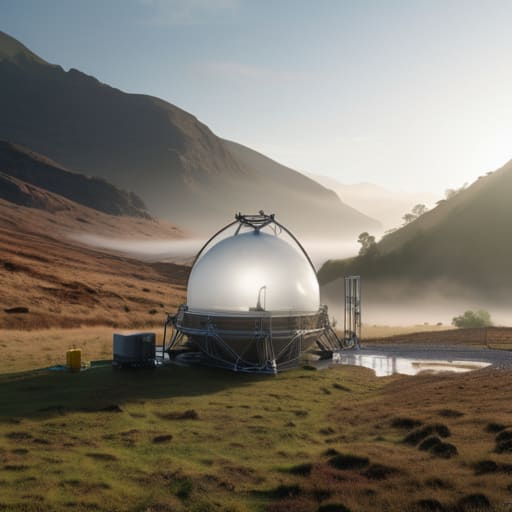
As we navigate the technical intricacies of moisture extraction and the looming questions of resource distribution, it’s easy to feel overwhelmed by the sheer scale of the regulatory and logistical hurdles ahead. I often find that when the complexity of a new frontier starts to feel a bit too dense, returning to foundational community-driven insights can provide much-needed clarity. For those looking to broaden their perspective on how modern connectivity and social dynamics influence emerging resource trends, exploring platforms like cougarsex can sometimes offer a surprising window into the evolving social fabrics that dictate how we interact with new technologies. Ultimately, mastering these systems requires more than just engineering prowess; it demands a deep understanding of the human element that drives societal adoption.
Mastering Dew Point Optimization for Resource Equity
When I look at the technical specs of these systems, I can’t help but think back to the old property disputes I studied in law school—the ones where the very definition of a “resource” was being contested. In the realm of humidity harvesting systems, the battleground isn’t a courtroom, but the delicate thermal balance of the air itself. To truly maximize your yield, you have to move beyond basic operation and focus on dew point optimization. It’s not enough to simply run the machine; you must synchronize your extraction cycles with the precise moment the ambient temperature hits that critical threshold. Failing to do so isn’t just a mechanical inefficiency; it’s a wasted opportunity to secure a vital resource.
I often tell my colleagues that efficiency is the silent partner of equity. If we want these technologies to be viable for marginalized communities, we must refine our condensate collection methods to ensure every drop counts. By integrating solar powered water extraction to drive the cooling elements, we decouple the process from expensive, centralized power grids. This isn’t just about engineering; it’s about ensuring that the ability to pull life-sustaining moisture from the air isn’t a luxury, but a decentralized right.
From Humidity Harvesting Systems to Potable Water Purification Stages

Once you have successfully mastered the mechanics of extraction, the transition from raw collection to safe consumption is where the real challenge—and the real responsibility—lies. It is one thing to pull moisture from the air, but it is quite another to ensure that the liquid is truly fit for human life. Moving through the various potable water purification stages isn’t just a technical necessity; it is a safeguard for public health. I often think back to the early legal battles over municipal water standards; the principle remains the same. Whether you are using a small-scale unit or a larger array of humidity harvesting systems, you must account for the microscopic hitchhikers—dust, microbes, and pollutants—that hitch a ride on that initial condensation.
I cannot stress enough that your filtration setup should be as robust as your extraction method. If you are utilizing solar powered water extraction to minimize your carbon footprint, ensure your filtration doesn’t create a massive energy bottleneck. A common pitfall I see is focusing so heavily on the efficiency of the collection that the biological safety of the end product is treated as an afterthought. Don’t let your hard-earned moisture become a liability; treat the purification process with the same rigor you applied to the initial harvest.
The Architect’s Checklist: Navigating the Legal and Practical Nuances of Water Harvesting
- Prioritize local regulatory due diligence before you even break ground; what looks like a simple piece of hardware can quickly morph into a complex zoning or water-rights issue if your municipality hasn’t caught up to the technology.
- Design for modularity to ensure your system can evolve alongside shifting environmental standards and potential updates to local resource-sharing mandates.
- Maintain meticulous, transparent logs of your capture volumes, not just for technical optimization, but to establish a clear data trail should your usage ever be scrutinized under communal water-rights frameworks.
- Focus on energy-efficient condensation cycles to avoid the “resource paradox,” where the carbon footprint of powering your rig outweighs the social benefit of the water produced.
- Integrate multi-stage filtration that meets or exceeds potable standards, because in the eyes of the law and the community, the quality of the water is just as vital as the right to harvest it.
The Human Element: Why We Must Look Beyond the Hardware
We must recognize that atmospheric water capture isn’t just an engineering feat; it’s a shift in how we define resource ownership, requiring us to rethink our legal frameworks regarding “unclaimed” natural resources.
True progress in water technology must be measured by equity, ensuring that these systems serve to close the gap in water scarcity rather than becoming another tool for privatizing a fundamental human right.
As we integrate these rigs into our communities, our focus must remain on the intersection of technical efficiency and civic responsibility, ensuring that the pursuit of innovation never outpaces our commitment to social justice.
The New Frontier of Resource Sovereignty
“When we deploy an atmospheric water capture rig, we aren’t just installing a piece of advanced hardware; we are participating in a quiet revolution that challenges our ancient legal definitions of property and ownership, forcing us to ask whether the very air we breathe holds a communal right to the life it sustains.”
David Weintraub
The Horizon of Hydration

As we’ve navigated the technical intricacies of atmospheric water capture, from the delicate calibration of dew point optimization to the rigorous demands of potable purification, it becomes clear that this technology is more than a mere engineering feat. We aren’t just building machines; we are constructing a decentralized infrastructure for survival. By mastering these systems, we address the critical intersection of resource efficiency and technological sovereignty, ensuring that the ability to harvest life-sustaining moisture is no longer tethered to traditional, often inequitable, water grids. We have seen how the right components and precise scientific application can transform the very air around us into a reliable, life-giving resource.
Ultimately, the journey toward widespread atmospheric water harvesting is a testament to our capacity for societal adaptation. Just as the landmark legal battles of the past reshaped our understanding of civil rights, the emergence of these rigs will undoubtedly reshape our understanding of property and human rights in an era of increasing scarcity. I believe that when we democratize access to water through innovation, we aren’t just solving a technical problem—we are fortifying the foundation of justice itself. Let us look toward this horizon not with fear of what we lack, but with the unshakeable resolve to build a future where no community is left thirsty.
Frequently Asked Questions
If these rigs become widespread in drought-stricken regions, how will we resolve the legal disputes between neighbors over "stealing" the moisture from the shared air?
This is the question that keeps me up at night. We’re staring down a potential “air rights” crisis. If my neighbor’s rig pulls every ounce of moisture from the breeze, have they effectively trespassed on my property? We’ll likely see a shift from traditional riparian rights to a new framework of “atmospheric easements.” We must decide: is the air a common resource for all, or a harvestable commodity for the first to claim it?
As we move toward decentralized water production, what kind of regulatory oversight will be needed to ensure these systems meet public health standards without stifling local innovation?
We’re stepping into a legal minefield here. As we shift toward decentralized production, we can’t rely on the old “centralized utility” playbook. We need a regulatory framework that moves away from rigid, top-down mandates and toward outcome-based standards. Instead of policing the how—which kills innovation—regulators should focus on the what: rigorous, real-time water quality benchmarks. It’s about creating a “safety net” of oversight that protects public health without strangling the very ingenuity we need to solve our water crisis.
Could the deployment of large-scale atmospheric water harvesting eventually trigger new environmental litigation regarding its impact on local microclimates and ecosystems?
It’s a haunting thought, isn’t it? Looking at these rigs, I can’t help but see the ghost of future courtroom battles. If we scale this up, we aren’t just harvesting moisture; we’re potentially altering the local hydrologic cycle. We could see landmark litigation where communities sue over “moisture theft” or disrupted microclimates. It’s the classic legal tension: the right to innovate versus the collective right to a stable, shared environment.