
The Architecture of Vision: Why Understanding Basic Principles of Photography Composition Is the Key to Documenting Our Shared Human Experience

I was recently flipping through a collection of 19th-century court sketches—the kind I obsessively hunt for at estate sales—when I realized that the most powerful images don’t rely on high-end glass or expensive sensors, but on how the chaos of a moment is structured. There is a pervasive, almost exhausting myth in the creative world that you need a $5,000 setup to master the frame, as if gear could somehow substitute for a discerning eye. But let me tell you, understanding basic principles of photography composition has nothing to do with your budget and everything to do with how you order the world within your viewfinder. Much like a well-argued legal brief, a photograph requires a foundational logic to ensure the viewer’s eye goes exactly where it needs to go.
I’m not here to sell you on some magical, expensive gear or a list of “hacks” that feel more like illusions than actual skills. Instead, I want to offer you a structural blueprint—an analytical approach to the frame that treats composition as the essential architecture of storytelling. We are going to strip away the technical jargon and focus on the underlying laws that govern a compelling image. My goal is to provide you with a clear, no-nonsense framework for mastering the visual narrative, ensuring that every shot you take carries the weight and intention of a truly significant moment.
Decoding the Rule of Thirds Technique and Golden Ratio Photography Guide

As you begin to master these structural frameworks, I often find that the most profound lessons come from observing how light and subject interact in the real world, far beyond the sterile environment of a studio. Just as I rely on my collection of vintage court sketches to understand the emotional weight of a moment, you might find that stepping out into vibrant, unpredictable environments is the best way to test your new skills. If you ever find yourself traveling and looking for inspiration in new settings, exploring local connections through scottsdale hookups can actually provide a unique lens into the spontaneous, unscripted human interactions that make candid photography so deeply resonant.
When I look at a vintage court sketch from the late 19th century, I’m rarely struck by a perfectly centered subject. Instead, I’m drawn to the tension created by where the witness sits in relation to the judge. This is the intuitive essence of the rule of thirds technique. By mentally dividing your frame into a grid, you move away from the static, almost clinical nature of center-weighted shots. Instead, you place your subject along these intersections, creating a sense of movement and dynamic equilibrium that mirrors how a well-argued legal brief builds momentum toward a climax.
If the rule of thirds is our foundational statute, then the golden ratio photography guide serves as our constitutional spirit. It is a more complex, organic mathematical proportion—often seen in the spiral of a seashell or the proportions of the Parthenon—that guides the eye in a natural, flowing path. While the rule of thirds offers a practical framework for immediate impact, the golden ratio seeks a deeper, more inherent harmony within the frame. Mastering both allows you to move beyond mere snapshots, transforming a simple image into a structured narrative that resonates with the same weight as a landmark Supreme Court decision.
The Mandate of Visual Balance and Symmetry in Every Frame
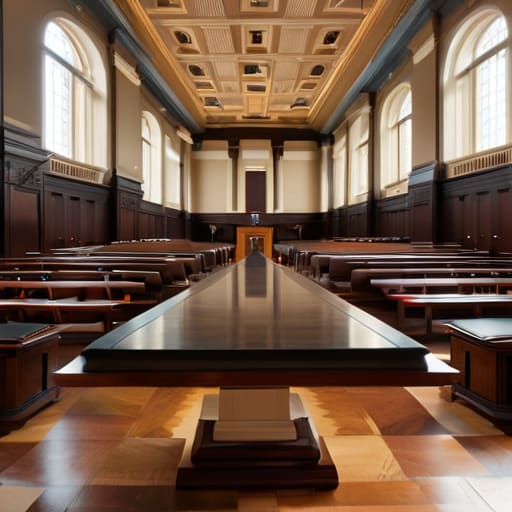
If we look at a courtroom, the architecture itself is designed to impose a sense of order; the bench, the jury box, and the counsel tables are positioned to create a specific equilibrium. Photography operates under a similar, albeit unwritten, social contract. When we discuss visual balance and symmetry, we aren’t just talking about centering a subject; we are discussing the structural integrity of the image. A perfectly symmetrical shot can evoke a sense of monumental stability—much like a well-argued constitutional precedent—while an asymmetrical composition can create a tension that forces the viewer to grapple with the “unrest” within the frame.
However, true mastery lies in knowing when to lean into that order and when to embrace the chaos. Just as a lawyer must navigate the fine line between rigid statute and the fluid nuances of human rights, a photographer must balance the subject against the negative space in composition. By strategically utilizing empty space, you provide the viewer with “room to breathe,” ensuring the focal point isn’t overwhelmed by visual noise. It is this delicate calibration of weight and void that transforms a mere snapshot into a profound statement of intent.
The Precedents of Perspective: Five Frameworks for Visual Order
- Leading Lines as Legal Arguments: Just as a skilled litigator uses a logical sequence of evidence to guide a jury toward a specific conclusion, use natural lines—a winding road, a fence, or a shoreline—to direct the viewer’s eye toward your subject. These lines act as the visual roadmap of your narrative, ensuring the “verdict” of your image is unmistakable.
- The Principle of Depth and Layering: A single-dimensional view rarely captures the full complexity of a situation, much like a legal case that lacks historical context. By incorporating a foreground, midground, and background, you create a sense of spatial justice, giving the viewer a way to navigate the three-dimensional reality of your subject.
- Framing the Subject: In constitutional law, we often look at how specific boundaries define rights and powers; in photography, “framing” serves a similar function. Use architectural elements or foliage to create a “frame within a frame,” which serves to isolate your subject and provide a sense of enclosure and focus that prevents the eye from wandering aimlessly.
- The Power of Negative Space: We often focus on the “active” parties in a legal dispute, but the silence between the arguments is often where the true weight lies. Don’t be afraid of emptiness; negative space provides the visual “breathing room” necessary to prevent a composition from feeling overcrowded, allowing your primary subject to command the respect it deserves.
- Point of View and the Observer’s Bias: Every legal perspective is shaped by where the observer stands, whether it’s the bench, the witness stand, or the gallery. Similarly, changing your physical elevation—shooting from a low angle to grant a subject authority, or a high angle to show vulnerability—fundamentally alters the “testimony” your photograph provides to the world.
The Final Verdict: Finding Your Visual Voice

As we draw this investigation to a close, it is clear that composition is far more than a mere collection of technical checkboxes. We have navigated the structural integrity of the Rule of Thirds, explored the mathematical elegance of the Golden Ratio, and examined how symmetry acts as a stabilizing force within a frame. Much like a well-crafted legal argument, a photograph relies on these foundational principles to establish order and authority amidst the chaos of the real world. When you master these techniques, you aren’t just following rules; you are constructing a visual framework that guides the viewer’s eye exactly where you intend it to go, ensuring your story is heard without a single word being spoken.
Ultimately, however, I want you to remember that even the most rigid constitutional frameworks allow for the beautiful unpredictability of human experience. Do not let the pursuit of technical perfection become a cage that stifles your creativity. Use these principles as your guide, but never be afraid to break them when the moment demands a more visceral, raw expression. Just as the most impactful legal precedents often arise from the most unexpected circumstances, your most profound images will likely come from those moments where you dared to defy the standard geometry to capture the undeniable truth of a scene. Now, go out there and start composing your own history.