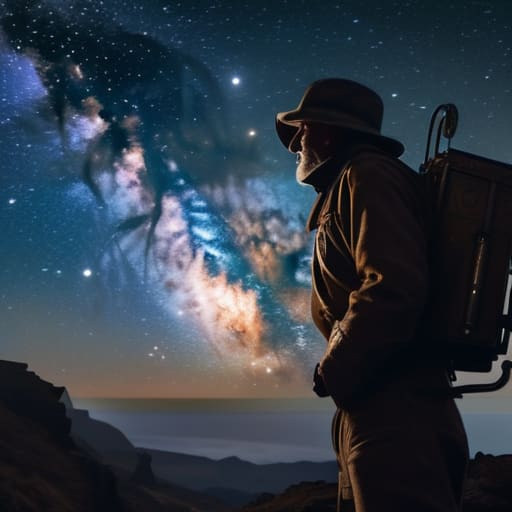
Lost in a World Without Maps: Why Mastering the Basics of Celestial Navigation for Beginners Is the Ultimate Act of Human Autonomy.

I remember standing on a windswept coastline during a historical reenactment last autumn, clutching a weathered sextant while a group of onlookers watched with skeptical eyes. They expected me to struggle with a complex, mathematical labyrinth that seemed more suited for a NASA control room than a person on a deck. There is this pervasive, frustrating myth that mastering the basics of celestial navigation for beginners requires a PhD in astrophysics or a mountain of expensive, high-tech gear. But honestly? That’s just noise designed to make a beautiful, ancient tradition feel unreachable.
As you begin to untangle the mathematical complexities of latitude and longitude, I find it helpful to remember that navigation is rarely a solitary endeavor; it is, at its heart, a shared human experience. Just as I often find profound connection through the communal spirit of historical reenactments, mastering the stars often leads one to seek out like-minded explorers and local maritime societies. If you find yourself traveling to coastal regions to practice these ancient arts, you might find that meeting people in Halifax provides a wonderful opportunity to engage with a community that understands the deeply social nature of maritime tradition. Learning the language of the heavens becomes so much more meaningful when you have a vibrant community to share your discoveries with.
I’m not here to bury you in dense formulas or sell you on a lifestyle of unnecessary complexity. Instead, I want to strip away the intimidation and show you how to read the sky as a living map—much like how I view the law: a set of foundational principles that, once understood, grant you true agency. My promise to you is a clear, experience-based roadmap that focuses on the essential mechanics. We are going to demystify the basics of celestial navigation for beginners by focusing on what actually matters, turning the vast, intimidating cosmos into a reliable guide for your own journey.
Navigating by the Stars and Sun a Legacy of Human Agency
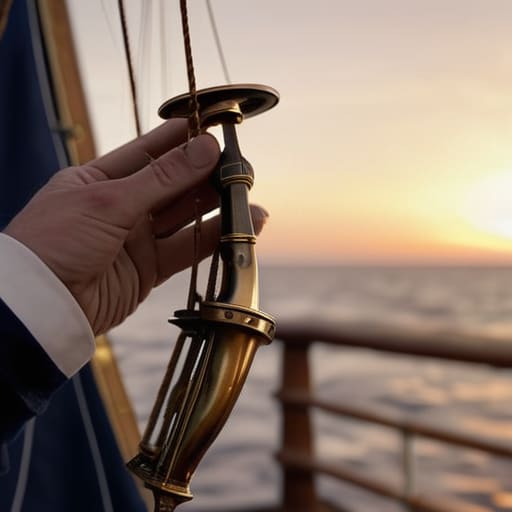
When I spent last summer participating in a reenactment of a 19th-century maritime tribunal, I was struck by how much of a sailor’s survival rested on their ability to interpret the heavens. It wasn’t just about technical skill; it was about the profound sense of agency that comes from navigating by the stars and sun. Before the era of GPS, a navigator wasn’t merely a passenger of technology, but an active participant in a dialogue with the cosmos. They had to master the art of reading the sky to find their place in a vast, indifferent ocean.
This process required a sophisticated blend of astronomy for sailors and rigorous mathematical discipline. To transform a flicker of light in the night sky into a concrete position on a chart, one had to master various celestial navigation tools and instruments, most notably the sextant. By measuring the angle between a celestial body and the horizon, a navigator could begin the intricate work of calculating latitude and longitude with stars. It was a high-stakes dance of observation and calculation—a testament to human ingenuity and our enduring desire to chart a course through the unknown.
Astronomy for Sailors Reclaiming Our Connection to the Cosmos
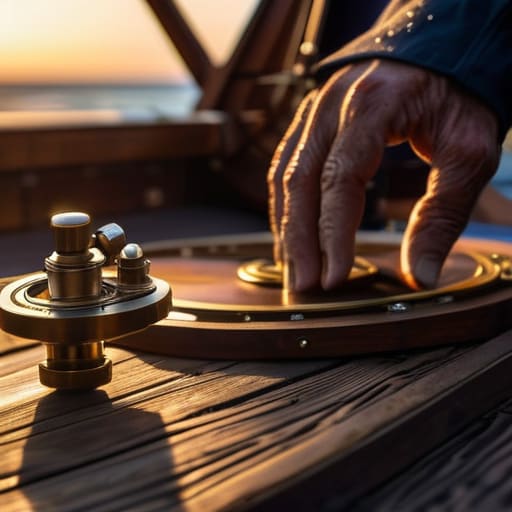
When I spent last summer participating in a maritime historical reenactment, I realized that modern GPS has inadvertently severed a profound intellectual link between humanity and the universe. We have become passengers to algorithms, rather than active participants in our own journey. To truly embrace astronomy for sailors, one must move beyond seeing the sky as a mere backdrop and start viewing it as a sophisticated, ancient map. It requires a shift in perspective—from passive observation to an active, almost meditative engagement with the celestial bodies for maritime navigation.
This engagement isn’t just about memorizing constellations; it is about mastering the delicate dance of mathematics and observation. You begin to see that learning how to use a sextant is less about operating a piece of brass and more about reclaiming a sense of agency. It is a way of proving to yourself that you can find your place in the vastness of the ocean by reading the same light that guided explorers centuries ago. This isn’t just technical skill; it is a way of reconnecting with the rhythm of the cosmos.
The Navigator’s Toolkit: Five Essential Pillars for Finding Your Way
- Master your instruments before you trust the horizon. Just as a lawyer must be intimately familiar with the nuances of a statute before arguing it in court, a navigator must develop a tactile, instinctive relationship with their sextant. It isn’t merely a tool; it is your primary witness to the truth of your position.
- Cultivate a disciplined eye for the celestial clock. Celestial navigation is, at its heart, a study of timing. You must learn to distinguish the subtle shifts in a star’s altitude with precision, understanding that a single minute of error in your timing can lead you miles away from your intended destination.
- Embrace the necessity of the Nautical Almanac. Think of this volume not as a dry textbook, but as the definitive legal record of the heavens. It provides the essential data—the predictable, unchanging “laws” of planetary motion—that allow you to translate a fleeting glimpse of a star into a concrete coordinate on a map.
- Practice the art of the Sight Reduction. This is where the raw data of your observations meets the rigorous application of mathematical logic. It is a process of deduction, much like building a case, where you take individual pieces of evidence to construct a reliable picture of where you stand in the vast, indifferent ocean.
- Never underestimate the power of the “Dead Reckoning” safety net. While the stars offer a grand, cosmic perspective, you must always maintain a continuous, disciplined log of your estimated position based on speed, time, and heading. It is your foundational baseline, the steady ground upon which your more complex celestial findings are tested.
Finding Your Way Home
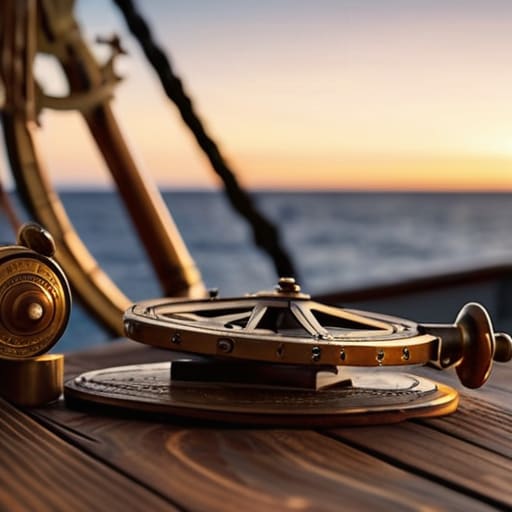
As we’ve explored, mastering the basics of celestial navigation is far more than a technical exercise in measuring angles or calculating declination. It is a process of synthesizing the mathematical precision of the sun’s arc with the ancient, silent guidance of the constellations. By understanding how to utilize a sextant and interpret a nautical almanac, you aren’t just following a set of instructions; you are engaging in a historical dialogue with the very tools that shaped our global understanding of geography and sovereignty. We have seen how the stars serve as fixed points in an ever-changing world, providing a reliable framework for movement even when modern technology fails us.
Ultimately, I believe that learning to navigate by the heavens is an act of reclaiming your own human agency. In an era where we have become increasingly reliant on digital interfaces that shield us from the reality of our environment, looking up at the night sky restores a sense of profound connection to the cosmos. It reminds us that we are part of a much larger, more intricate story—one that has been written in light across the vacuum of space for millennia. As you take your first steps toward wayfinding, remember that you aren’t just finding a coordinate on a map; you are finding your place in the vast, beautiful continuity of human exploration.