Prisoners’ Rights: Advocating for Justice Behind Bars

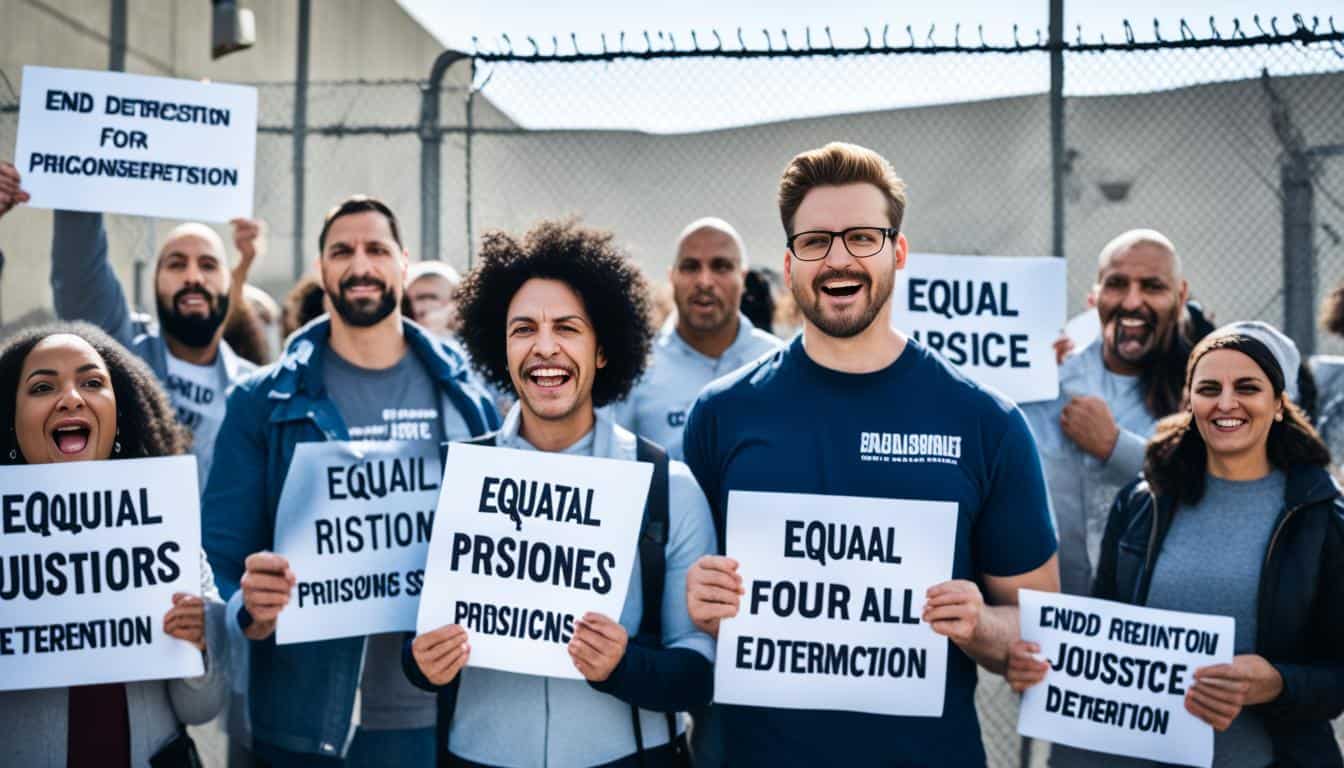
Learning that nearly 93% of DC Department of Corrections (DOC) inmates are Black is startling. This is the case even though Black people make up just 45% of DC’s population. Such a big difference shows why fighting for prisoners’ rights is crucial. It points to the need for justice for those harmed by systemic problems and poor prison conditions. Rights Behind Bars leads the way in this fight, pushing for changes and aiding lawsuits that make jail time more humane.
To truly understand these issues, one must be as devoted as the Prison Advocacy Network (PAN). Joining their program means giving about 40-45 hours each year to the cause. This level of commitment shows how serious the problem is. It emphasizes the need to work together to end the unfair treatment of people in jail. Getting legal support for prisoners or raising awareness about their struggles is vital. It helps draw attention to violations of human rights and the big issues in our prison system.
Key Takeaways
- Nearing 93% of incarcerated individuals in DC’s DOC are Black, whereas only 45% of DC’s population is Black.
- Systemic issues and inhumane prison conditions demand robust advocacy for prisoners’ rights.
- Participation in initiatives like PAN requires 40-45 hours annually, reflecting needed dedication for effective legal advocacy for prisoners.
- Litigation and reforms are crucial actions for addressing the injustices faced by inmates.
- Organizations like Rights Behind Bars play a pivotal role in supporting litigation and humanizing imprisonment.
The State of Incarceration in the United States
The United States holds about 25% of the world’s prisoners but only has 5% of the global population. This shows the urgent need for change in the US prison system.
Historical Context
The history of incarceration in the US is filled with racial and social inequalities. Laws and practices after the Civil War played a big part in shaping today’s system. Efforts like the Model Sentencing and Corrections Act of 1978 and court decisions aimed at fixing these issues.
But prisons still face big challenges. Issues like being too full and not having enough resources are still problems today.
Statistics and Demographics
Over 1.9 million people are locked up in the US, in different kinds of prisons. Private prisons hold 8.2% of these inmates and made almost $4 billion in 2017. The Supreme Court had to step in to fix overcrowding in California.
Also, a lot of people are held by immigration officials. This group is growing fast within the prison population.
Systemic Issues
The prison system has many problems. Issues range from too many private prisons to not enough help for disabled prisoners. The Prison Litigation Reform Act makes it hard for prisoners to sue for their rights.
This leads to bad conditions, not enough chances for inmates to improve, and unfair treatment based on race. Private prisons profit from these problems, making things worse.
Legal Aid for Incarcerated Individuals
People in prison face lots of legal issues. Some because they didn’t have good lawyers. Others because they don’t know their rights. It’s important to help them with legal advice. This is a way to make sure they are treated fairly and justly.
Availability and Access
It’s vital that prisoners access to legal aid easily. Without it, they can’t deal with the complex legal system. Legal help is more than a service; it’s a lifeline. It defends their rights. Many groups work hard to offer this help. They change lives, inside and outside of prison.
Role of Non-Profits
Non-profits are key in helping prisoners. The Prisoners’ Rights Project of The Legal Aid Society is one leader in this. They fight for the rights of prisoners. They deal with violence, healthcare issues, and unfair treatment. Their work gives prisoners access to legal aid. They also work to make jails better places.
To wrap up, legal help for prisoners is crucial. It supports fairness and equality. With the strong backing of non-profits, it helps prisoners get ready for life after jail. This help is not just a service. It’s vital for giving prisoners a chance to turn their lives around.
Human Rights Violations in Prisons
Addressing human rights in prisons exposes the harsh realities many inmates face worldwide. Rights violations and abuses are common in many countries. For example, in Venezuela, a jungle prison witnessed the killing of at least twenty-nine inmates. This has led to calls for prison reform.
In Tajikistan, over a hundred prisoners died during a riot in Khujand due to harsh treatment. Morocco saw a horrific event in Oukacha prison in 1997, where twenty-two inmates were burned alive, likely because it was too crowded.
Overcrowding in Tihar Central Jail in India poses serious health risks for 10,000 inmates. There’s not enough medical staff. In Russia, tuberculosis claimed the lives of 2,000 inmates in one year. These examples show why we must focus on human rights in prisons around the world.
In Venezuela, the lack of guards leads to violence among inmates. In countries like Colombia, India, and Mexico, corruption inside prisons benefits wealthy inmates. For instance, in Indonesia, two prisoners escaped after bribing guards.
Overcrowding leads to dangerous situations in many countries. Rwanda faces life-threatening overcrowding in its prisons. Panama’s Modelo prison was so overcrowded that it was eventually demolished in 1996.
In the United States, a study found that 64% of staff-on-inmate sexual abuses were by correctional officers. US prisons often see assaults, ignored medical requests, and unnecessary deaths. Other countries like Mexico, Russia, and the UK also deal with decaying prison conditions.
To fight against prison abuses, inmates need legal ways to make a change. They can file for injunctive relief or seek damages for civil rights violations. Addressing human right violations in prisons demands legal actions and systemic reforms worldwide.
Challenges Faced by Prisoners
Prisoners face many big obstacles every day. These problems show how tough life in prison can be. Violence and poor security are common in many jails. Health issues worsen because of the prison environment, hurting prisoners’ mental and physical health.
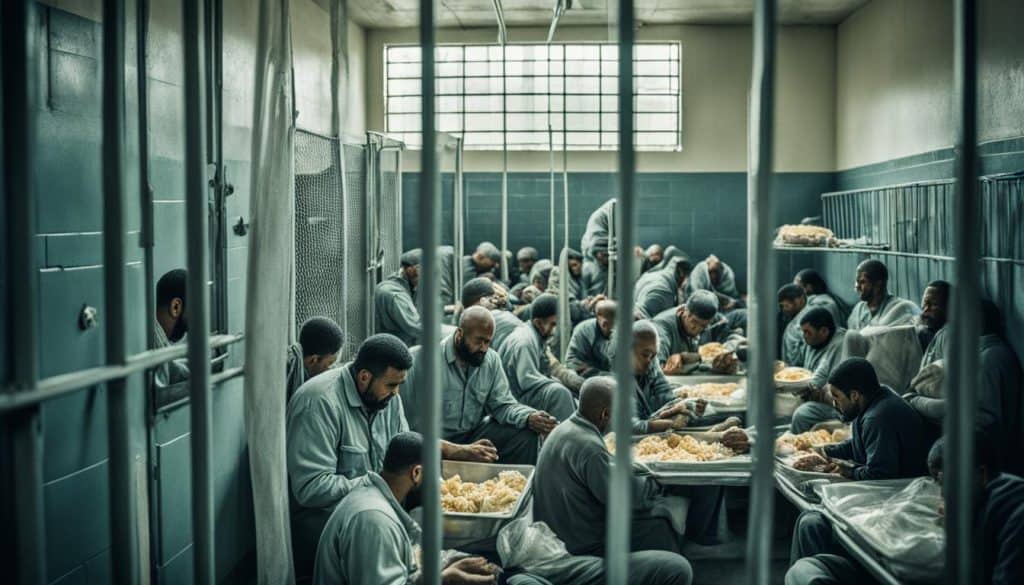
Healthcare for inmates is a big worry. Poor medical care means many illnesses go untreated, sometimes leading to death. The Prisoners’ Rights Project has helped set healthcare standards, aiding HIV patients and those with mental health problems.
Educational problems add to incarceration difficulties. Efforts to educate young inmates have started, like the high school on Rikers Island. Yet, there’s still much to do.
Procedural injustices also make life harder for prisoners. The wrong use of solitary confinement and restraints shows the many issues in prison life. These issues need constant attention and legal action.
Discrimination against women and religious minorities is especially troubling. Legal fights and advocacy work to fix these wrongs and improve treatment of inmates.
The challenges prisoners face are big and complex. It’s clear we need ongoing reforms and strong advocacy. Projects like those by the Prisoners’ Rights Project are helping, but we must keep working to solve incarceration difficulties.
Important Litigation in Prisoners’ Rights
In the United States, many key legal battles have helped shape the rights of prisoners. These include major court decisions to cases still ongoing. The quest for fairness in prisons is always moving forward.
Landmark Cases
Historical cases have set the bar for protecting the rights of those in jail. The case of Sheppard v. Phoenix dealt with the need for mental health services in New York’s prisons. Nunez v. City of New York shone a light on the use of too much force in jails. In a key ruling in April 2023, a judge demanded big improvements in Arizona. These improvements were for medical and mental health care in prisons. Each case has helped make things better for people in prison.
Ongoing Litigation
Today, many court cases are still fighting for the rights of prisoners. For example, the ACLU and lawyers sued in Louisiana to keep kids from being sent to an adult prison. In Mississippi, a suit was filed over the very violent conditions at a certain jail. Section 1983 lawsuits let people fight against unfair or harmful treatment. Also, the ACLU fought against jail conditions during the coronavirus crisis in a 2021 case. This was against the Sheriff of Dallas County.
All these actions are key in pushing for better treatment of prisoners. By keeping up the fight and making changes, we aim for fairer and kinder ways to handle imprisonment.
The Role of Advocacy Organizations
Advocacy organizations are key in the battle for prison reform and protecting inmates’ rights. Rights Behind Bars and the Prisoners’ Rights Project are two examples. They fight against abuse, improve health and safety, and advocate for better prison conditions.
The Protection and Advocacy (P&A) network stands out in this effort. It offers legal help to the disabled in prisons across all States and territories. P&As have a special role in lawsuits, helping them bypass some usual legal hurdles.
P&As also have the power to check if prisons follow the law. They investigate abuse and neglect in jails. High-profile cases like Murray v. County of Santa Barbara show their strong influence on inmate rights and policy reforms.
Reformers often team up with non-profits and businesses to strengthen their work. Together, they tackle wide-ranging issues that affect inmates. Such collaborations aim to shut down places like Rikers Island and stop solitary confinement.
The dedication of these groups shows their commitment to justice and humane conditions for prisoners. Their hard work is essential in pushing for true, enduring changes in the prison system.
Prisoners’ Rights
Fighting for prisoners’ rights means making sure they are treated with respect by the law. The reason we do this is based on U.S. Supreme Court decisions. These decisions help protect prisoners’ constitutional rights.
The case of Turner v. Safley set rules for how prisons handle speech and association rights. Pell v. Procunier showed that prisons must offer other ways for prisoners to exercise their rights.
Pope v. Hightower looked at how rules affect everyone in prison, including staff and resources. Fraise v. Terhune and U.S. v. Felipe discussed the balance between safety and regulation changes.
It’s important to know when to enforce prisoners’ rights. Procunier v. Martinez challenged the ban on certain reading materials. Thornburgh v. Abbott gave prisons more control over First Amendment rights.
Prisoners are protected by the Constitution and laws. The Eighth Amendment guards against harsh punishments and fines. Laws like the ADA and the Religious Land Use and Institutionalized Persons Act help protect inmates’ rights.
Pennsylvania Dept. of Corrections v. Yeskey made sure the ADA applies to prisons. It helps those with disabilities get what they need. The Prison Litigation Reform Act requires that prisoners try to solve issues internally before going to court. This was detailed in Jones v. Bock.
Bail and detention rules differ by state. Nineteen states have generous bail rights. Meanwhile, 22 states have rules for holding people before their trial. States like Virginia have early release programs.
In short, many laws and decisions aim to protect prisoners’ rights and dignity. From ADA accommodations to complaint processes via the PLRA, these efforts ensure justice within U.S. prisons.
Future Directions and Policy Changes
As we look to the future, the U.S. sees big changes in its justice system. The aim is to fix deep issues in our prisons, focusing on rights reforms. With two million people behind bars and many more with criminal records, change is needed for a fairer approach.
In 2022, lawmakers in 15 states and Washington D.C. made new rules to reduce prison numbers. Washington D.C.’s Revised Criminal Code Act of 2022 got rid of many fixed sentences and allowed for more court reviews. California’s Racial Justice Act for All also stands out, helping those convicted before 2021 if they faced racial bias.
Efforts are being made to better prison life and drop repeat offenses. The Federal Bureau of Prisons is introducing programs like BRAVE and STAGES. Studies found that inmates in education programs are less likely to return to prison by 43%. Laws like the Clean Slate Acts in twelve states and voting rights changes in Minnesota are key too. They help past prisoners get back on their feet. These reforms are a big step toward respecting everyone’s rights in the system.