Evidence Law: New Standards for Admissibility

Imagine standing in a courtroom, with tension filling the air. The future of a life is on the line. Evidence is closely examined under the law’s strict guidelines, affecting justice’s path. I’ve experienced these intense moments. Each piece of legal proof is carefully looked at and evaluated for admissibility. The Federal Rules of Evidence were introduced on January 2, 1975. Since then, they have changed to adapt to legal needs. These updates have shaped how we view and use evidence in court. They have led to new standards that chase truth and fairness.
Recent changes focus on Rule 702. They strengthen the role of trial judges as gatekeepers. They also fix past inconsistencies. These updates are key for lawyers working through complex admissibility and proof standards.
Key Takeaways
- The Federal Rules of Evidence were enacted on January 2, 1975.
- The rules have been regularly updated through amendments by Congress and the Supreme Court.
- Committees appointed to recommend rules must operate transparently, with meetings generally open to the public.
- Proposed rules and explanations must be provided to Congress by designated deadlines.
- Simplifying the clarity of Rule 702 is a focal point of recent amendments.
Introduction to Evidence Law and Its Evolution
The Evolution of Evidence Law has changed courts around the world. In the past, legal systems didn’t separate civil and criminal cases. They mixed up facts and law. People used nonrational evidence like trial by fire or drowning. They also used semirational evidence, where the accused swore oaths with supporters.

By the 13th and 14th centuries, irrational methods began to fade. Towns grew, Christian theology spread, and states became stronger. These changes helped reform Evidence Law. The Roman-canonical law introduced a new system. It demanded reliable witness testimonials, using scholastic philosophy.
The Historical Context of the Federal Rules of Evidence
On July 1, 1975, the Federal Rules of Evidence were set up. They addressed changing legal needs in the U.S. These rules aimed to make courtrooms fairer and more consistent. It was a big step forward, organizing how trials handle evidence.
The Anglo-American legal system focused on evidence rules differently than Continental Europe. In the U.S., lawyers object using terms like “Immaterial” and “Hearsay.” Europe didn’t focus on these rules as much. In the past, jurors often knew the verdict before trials started. Over time, this led to the jury trials we see today in America.
Key Amendments Over the Years
The Federal Rules of Evidence have seen many changes. One key moment was the 1993 Daubert decision. This case changed how expert testimony is used in court. It made judges check the relevance and reliability of scientific evidence more closely.
Initially, there was a big difference in how the Continental and Anglo-American systems found facts. But, changes over time have made evidence rules better. These amendments make sure courtrooms are fair and just. As laws keep evolving, these improvements help make justice more accurate and fair.
Recent Changes to Rule 702 of the Federal Rules of Evidence
Effective December 1, 2023, there’s been a big update to Rule 702 of the Federal Rules of Evidence. It’s the most important change in nearly 25 years. The update sharpens the rules on Expert Testimony Admissibility. It does this by setting strict rules for such testimony to be considered valid. These adjustments fix past mistakes and ensure the rules follow key court decisions like the Daubert Standard and Kumho Tire rulings.
Clarifications on Expert Testimony Admissibility
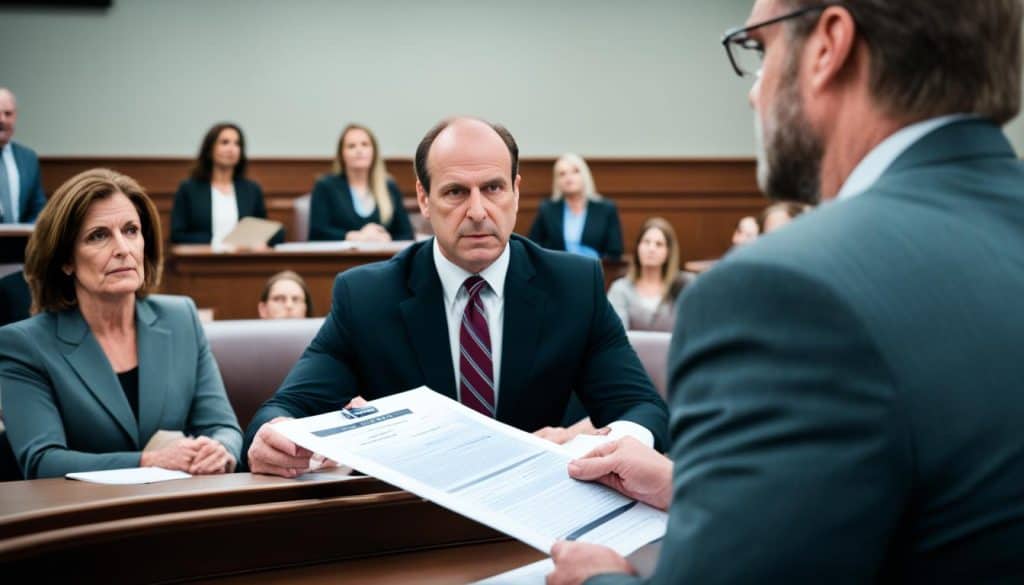
The new Rule 702 sets clear demands. Those who want to use expert testimony in court must prove it meets four key points. These points are: (a) the expert’s insight helps the fact-finder, (b) the testimony is based on ample facts or data, (c) it comes from reliable principles and methods, and (d) these methods are properly used for the case in question. Federal courts are now carefully checking expert testimonies against these criteria. This often results in testimonies being limited or not allowed.
Impact of Daubert and Kumho Tire Decisions
The Daubert Standard and Kumho Tire cases have deeply impacted these updates. The Daubert v. Merrell Dow Pharmaceuticals case gave us a checklist for assessing scientific expert testimony. It highlighted the importance of factors like how a theory can be tested, if it’s been peer-reviewed, its error rate, and its acceptance in the scientific community. The Kumho Tire Co. v. Carmichael case expanded these factors. It included technical and other kinds of expert testimony. These cases ensure that various types of expert opinions are judged by the same high standards.
The Gatekeeping Role of Trial Judges
Rule 702’s changes highlight the important role of trial judges. They must closely check the methods used by experts. The updates specify it’s not enough for an expert to simply have a valid method. This method must also be applied correctly to the specifics of the case. This puts more responsibility on judges to weed out unreliable expert opinions. By doing so, only the most credible testimonies reach the jury. Early on, courts have started turning away testimonies that don’t meet these stringent requirements. This shows how important it is for those in court to carefully present expert evidence.
Evidence Law: Requirements Under the Preponderance Standard
In civil cases, proving something is more likely true than not is key. This is the preponderance of evidence standard. It means the evidence must slightly favor the person making the claim.

Defining the Preponderance Standard
In civil trials, like personal injury cases, this standard is used. The plaintiff needs to show there’s a greater than 50% chance they’re right. It’s different from criminal trials, where proof must be almost certain.
Ensuring Reliability and Relevance in Expert Testimony
Rule 702 changes stress reliable expert testimony is crucial. Experts must use solid facts and methods. And they must apply them properly to the case to be relevant in court.
Keeping strict standards helps lawyers build strong cases. It’s key in meeting the needed evidence level. It makes sure they have a good chance of winning in civil trials.
Implications of New Standards for Legal Practitions
Rule 702 of the Federal Rules of Evidence recently changed. This means lawyers must now show more clearly that their expert evidence is reliable and relevant. It brings both new challenges and opportunities to the legal profession.
The recent rise in medical malpractice lawsuits, judged by the risk-benefit analysis rather than traditional customary practice, is one area where these new expert witness standards come into play.
Lawyers now face stricter scrutiny from judges when presenting expert testimony. Judges will closely examine the methods and relevance of such evidence. This is seen in important cases like *Daubert v. Merrell Dow Pharmaceuticals* and *Kumho Tire Co. v. Carmichael*.
The use of evidence-based medicine (EBM) in court highlights the need for solid, real-world proof. Cases like *Hinlicky v. Dreyfuss* show this shift by accepting guidelines from respected health organizations. This demands a careful approach when presenting scientific evidence in court.
In insurance disputes, the importance of empirical evidence has grown. Lawyers must use the latest research to support their clients’ claims for benefits. As the legal landscape changes, lawyers must keep learning and adapting to succeed.
How These Changes Affect State Courts
The recent changes to the Federal Rules of Evidence are reshaping state court cases. Courts in states handle nearly all of America’s civil and criminal legal cases. It’s crucial for lawyers to grasp these federal alterations, preparing for more cases after the pandemic.
Take North Carolina as an example. It’s one of the “Daubert states” that follow Federal Evidence Guidelines. This means legal processes in state trials are likely to adopt federal standards soon. With the U.S. having 94 District Courts and 13 Courts of Appeals, states might start mirroring these strict federal rules.
State court judges, whether elected or appointed, need to pay close attention to these federal law updates. The Illinois Special Supreme Court Committee worked on aligning state evidence rules with federal ones. Lawyers everywhere should get ready for these types of changes in their areas too.
In the end, updating evidence rules means cases can be resolved faster. This is essential for state courts that manage so many cases. For those practicing law, knowing about these changes is key to success in state trials.
Expert Testimony and the Burden of Proof
The revised Rule 702 of the Federal Rules of Evidence emphasizes expert testimony’s burden of proof. A proponent must show through evidence that the testimony is reliable and relevant. This involves proving the expert’s method is scientifically solid and correctly used.
Historically, Daubert v. Merrell Dow Pharmaceuticals, Inc. in 1993 set strict rules for accepting expert testimony. It looked at peer review, publication, error rate, and acceptance in the science world. In 2015, a military judge listed six factors for deciding if expert testimony should be allowed. They include the expert’s qualifications and the testimony’s relevance and reliability.
The U.S. Supreme Court in the Daubert case highlighted that trial judges must ensure expert evidence is relevant and methodologically correct. This was echoed in a 2013 case stressing expert testimony’s intellectual rigor. Rule 702 demands thorough preparation and validation of expert evidence, preserving the legal process’s integrity.
Legal practitioners must carefully check their expert witnesses due to these strict rules. They must ensure witnesses are not only qualified but their methods are impeccable. This careful selection is vital in courts that follow the Daubert Standard. By adhering to these rigorous criteria, practitioners can uphold the proof burden, making their expert testimony pivotal in their case.