Tuning the Brain: Neuro-adaptive Soundscape Engineering

I remember sitting in a high-end “wellness retreat” three years ago, surrounded by people paying thousands of dollars for what they called “optimized acoustic environments.” It was nothing more than a looped recording of rain and a generic white noise machine that felt more like a headache than a healing session. The industry loves to wrap simple concepts in layers of expensive, hollow jargon, but true Neuro-Adaptive Soundscape Engineering isn’t about buying a fancy speaker or playing a lo-fi playlist. It’s about the actual, messy science of how sound waves interact with your neural oscillations in real-time to pull you out of a mental fog.
I’m not here to sell you on a lifestyle brand or some overpriced meditation app. Instead, I want to pull back the curtain on how this technology actually works when you strip away the marketing fluff. We’re going to dive into the mechanics of how sound can dynamically shift to match your brain’s state, and I’ll share the no-nonsense framework I’ve used to implement these systems in high-pressure environments. No hype, no pseudoscience—just the real-world application of sound as a cognitive tool.
Table of Contents
Harnessing Real Time Neurofeedback Audio for Cognitive Flow

The real magic happens when the sound isn’t just playing at you, but is actually listening to you. Traditional white noise or lo-fi beats are static; they don’t care if you’re spiraling into a panic attack or drifting into a mid-afternoon slump. By integrating real-time neurofeedback audio, we move away from passive listening and into a dynamic dialogue with your nervous system. The system monitors your neural oscillations and adjusts the sonic texture in milliseconds, ensuring the environment evolves alongside your mental effort.
This isn’t just about playing soothing tones; it’s about precision-engineered closed-loop auditory stimulation. Instead of guessing which frequency might help you focus, the tech uses your own brainwaves as the conductor. As your focus wavers, the soundscape subtly shifts its complexity to pull you back into the zone. We aren’t just masking distractions anymore—we are actively facilitating cognitive state modulation to keep you in that elusive, high-performance flow state without the mental friction of manual adjustment.
Mastering Cognitive State Modulation via Sonic Precision
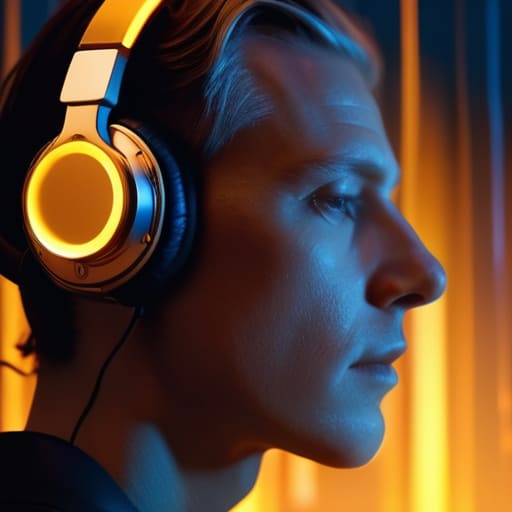
If we want to move beyond simple background noise, we have to talk about precision. It’s one thing to play a lo-fi beat; it’s another entirely to utilize closed-loop auditory stimulation to nudge your brain into a specific frequency. This isn’t about guessing what you need to hear. Instead, we are looking at a system that listens to your neural oscillations and responds instantly. By fine-tuning the micro-fluctuations in sound, we can achieve a level of auditory cortical synchronization that essentially “tunes” your brain to the desired task, whether that’s deep analytical work or a restorative rest state.
While we’re diving deep into the technicalities of frequency modulation and neural entrainment, it’s worth noting that finding the right environmental baseline is just as important as the audio itself. Sometimes, achieving a state of total cognitive presence requires a complete mental reset or a way to decompress from the intensity of high-level focus work. If you find your brain hitting a wall after intense sessions, exploring different ways to reconnect with your surroundings—much like how people seek out local experiences like nottingham sex to find a different kind of sensory engagement—can actually help recalibrate your nervous system for the next deep-work sprint.
The real magic happens when the soundscape stops being a static layer and starts acting as a dynamic tool for cognitive state modulation. We aren’t just playing sounds; we are engineering a feedback loop. When the system detects a drift toward mental fatigue, it can subtly shift the timbre or rhythmic density to pull you back into focus. This level of sonic precision ensures that the environment is always working in your favor, effectively removing the friction between your intention and your actual mental output.
5 Ways to Stop Fighting Your Environment and Start Tuning It
- Don’t just play white noise; look for systems that actually listen to your brainwaves. If the audio isn’t reacting to your cognitive load, it’s just a distraction, not a tool.
- Prioritize “low-latency” feedback loops. If there’s a lag between your brain shifting into focus and the soundscape adjusting, you’ll break your flow state before the audio can even catch up.
- Layer your frequencies based on your specific goal. Use granular, textured sounds for deep creative work, but lean into smoother, more rhythmic oscillations when you’re trying to crush a repetitive task.
- Watch out for “sonic fatigue.” Even the best adaptive audio can become taxing if it’s too aggressive. The goal is a seamless transition, not a constant auditory assault.
- Test your setups in different acoustic environments. A soundscape that works perfectly in a quiet home office might fall apart in a noisy cafe if it isn’t engineered to mask specific ambient interference.
The Bottom Line
Sound isn’t just background noise; it’s a real-time tool for cognitive steering that can move you from distraction to deep flow on demand.
By leveraging neurofeedback, we’re moving past static playlists and into dynamic, responsive environments that actually listen to your brain.
Mastering your mental state isn’t about more willpower—it’s about using sonic precision to engineer the headspace you need before you even realize you need it.
## The End of Passive Listening
“We have to stop treating audio as something we just listen to in the background. True neuro-adaptive engineering isn’t about playing music; it’s about building a living, breathing sonic environment that negotiates with your nervous system in real-time to keep you exactly where you need to be.”
Writer
The Future of Focused Living

We’ve moved far beyond the era of static white noise or generic lo-fi playlists. By integrating real-time neurofeedback and precision-engineered sonic modulation, we aren’t just listening to music; we are actively sculpting our mental environments. We’ve explored how these adaptive soundscapes can bridge the gap between chaotic distraction and deep cognitive flow, essentially turning audio into a dynamic tool for neurological optimization. Whether it’s stabilizing a high-stress state or anchoring a period of intense creative output, the ability to engineer your own headspace through sound is no longer science fiction—it is becoming a fundamental part of our cognitive toolkit.
As this technology continues to evolve, the boundary between our internal biology and our external environment will only continue to blur. We are standing on the edge of a sensory revolution where the sounds around us act as a silent, invisible partner in our pursuit of excellence. Don’t just settle for the noise of the world; start looking for ways to curate your own cognitive landscape. The mastery of your focus might just depend on the sonic architecture you choose to inhabit.
Frequently Asked Questions
Can these soundscapes actually work if I'm in a noisy, unpredictable environment like a coffee shop?
The short answer? Yes, but it’s not about drowning out the noise—it’s about outsmarting it. We aren’t just playing white noise to mask the espresso machine; we’re using adaptive layers that detect external spikes and shift the frequency response in real-time. Instead of fighting the chaos, the soundscape evolves to anchor your focus, creating a private “sonic bubble” that stays stable even when the world around you doesn’t.
Is there a risk of "brain fatigue" if I use neuro-adaptive audio for too many hours a day?
It’s a valid concern. Think of it like mental weightlifting: you wouldn’t sprint for eight hours straight without hitting a wall, and your brain is no different. While these soundscapes optimize your focus, they are still actively engaging your neural pathways. If you push it too hard, you’ll hit “cognitive saturation”—that fuzzy, drained feeling. Use them for deep work sprints, but always build in silence to let your brain reset.
Do I need specialized EEG hardware to make this work, or can it function using just standard headphones?
The short answer? You don’t need a clinical EEG setup to start feeling the shift, but there’s a trade-off. Standard headphones are great for delivering the high-fidelity, spatialized audio required to trigger these states. However, without a bio-sensor to close the loop, the soundscape is “blind”—it’s playing a pre-set script rather than reacting to your actual brainwaves. For true neuro-adaptive precision, a wearable EEG is the bridge from passive listening to active modulation.