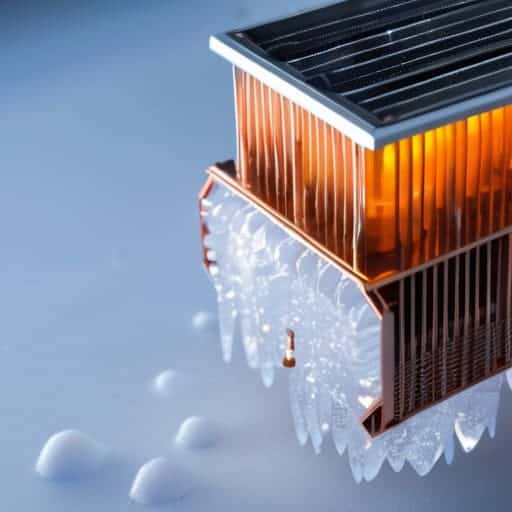
Cold From Heat: 5 Genius Peltier Cooling Module Projects

I was hunched over my workbench last Tuesday, staring at a charred circuit board that was supposed to be the heart of my latest prototype, when it hit me: we often treat thermodynamics like a rigid, unyielding statute, when in reality, it’s much more like a living social contract. Most hobbyists approach Peltier cooling module projects under the false impression that more power automatically equals more chill, but that’s a dangerous fallacy. In my experience, ignoring the delicate balance of heat dissipation is the fastest way to turn a promising experiment into a costly legal settlement with your own wallet. Much like a poorly argued constitutional brief, a cooling system without proper thermal management is fundamentally destined to fail under pressure.
In this guide, I’m stripping away the academic fluff and the marketing hype to give you the practical, ground-level truth about mastering these modules. We aren’t just going to talk about theory; I will walk you through the essential architecture required to build Peltier cooling module projects that actually perform reliably in real-world conditions. From selecting the right heat sinks to managing the inevitable current draws, you’ll gain the technical clarity needed to transform your ideas from mere sketches into functional, enduring realities.
Table of Contents
- Step-by-Step Instructions
- Decoding the Thermoelectric Cooler Circuit Diagram
- Mastering the Peltier Heat Sink Assembly
- The Precedent of Precision: Five Essential Mandates for Thermal Success
- The Verdict on Thermal Management: Three Lessons for Success
- The Equilibrium of Energy
- The Final Verdict on Thermal Control
- Frequently Asked Questions
Guide Overview
Tools & Supplies
- Soldering iron for electrical connections
- Multimeter for voltage testing
- Thermal paste applicator for heat transfer
- Peltier module (TEC1-12706) 1 unit
- CPU heatsink and fan combo 1 unit
- Power supply (12V DC) 1 unit
- Thermal conductive paste 1 tube
- Insulating foam or thermal pads 1 pack
Step-by-Step Instructions
- 1. Before you even touch a soldering iron, you must assemble your “evidence”—the components. Just as a prosecutor wouldn’t walk into a courtroom without a complete case file, you shouldn’t start a Peltier project without a high-quality thermoelectric cooler (TEC), a robust power supply capable of handling the high amperage, and, most importantly, two high-performance heatsinks. I often find that people underestimate the thermal debt they are accruing; if you don’t have a way to move heat away from the hot side, your project will fail before it even begins.
- 2. Now, we move to the application of thermal interface material, a step that requires the precision of a legal brief. Apply a thin, even layer of thermal paste to both sides of the Peltier module. You aren’t looking for a thick, messy coating—that actually acts as an insulator—but rather a seamless connection between the module and your heatsinks. Think of this paste as the connective tissue that allows the flow of energy to remain uninterrupted and efficient.
- 3. The assembly of the “sandwich” is where the structural integrity of your project is decided. Place the Peltier module between your two heatsinks, ensuring the side intended to get cold is facing your target area. As you tighten the mounting screws, do so with a sense of measured equilibrium; tightening one side too much can warp the delicate ceramic plates of the module, much like an unbalanced judicial ruling can destabilize an entire legal precedent.
- 4. Once the physical structure is secure, you must establish the electrical circuit. Connect the red positive lead of the Peltier to your power source and the black negative lead to the ground, but I strongly advise integrating a PWM (Pulse Width Modulation) controller into this loop. This allows you to regulate the intensity of the cooling, preventing the module from drawing too much current and potentially burning itself out in a sudden, catastrophic surge.
- 5. Before you attempt to cool anything substantial, you must conduct a preliminary “hearing”—your initial power-on test. Apply power and immediately feel the temperature differential between the two sides. You should notice one side becoming icy while the other becomes uncomfortably warm; if both sides remain neutral or, heaven forbid, both become hot, you have a fundamental breach in your thermal management or wiring that must be addressed before proceeding.
- 6. Finally, once the system is stable, you can begin the integration phase, whether you are building a miniature wine cooler or a specialized sensor housing. Ensure that any condensation formed on the cold side is managed with a moisture-resistant barrier, as water is the natural enemy of both electronics and long-term project stability. Much like the law must account for the unpredictable nature of human behavior, your design must account for the physical realities of thermodynamics.
Decoding the Thermoelectric Cooler Circuit Diagram
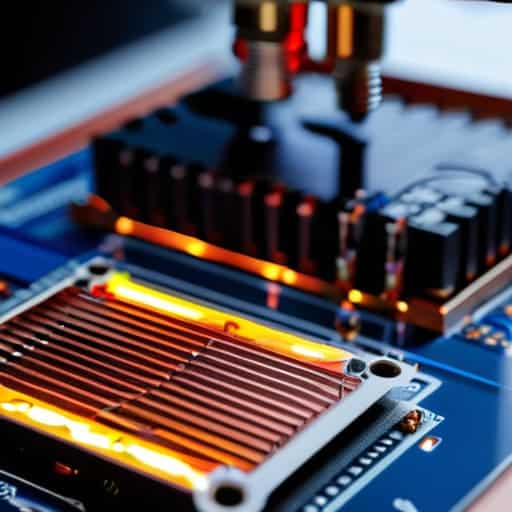
When I sit down to study a complex piece of legislation, I’m not just looking at the words on the page; I’m looking for the underlying architecture that holds the entire argument together. Designing a thermoelectric cooler circuit diagram requires that same analytical rigor. You cannot simply connect wires and hope for the best; you must understand the flow of energy and the potential for systemic failure. Much like a constitutional amendment that lacks clear enforcement mechanisms, a circuit without proper current regulation is destined to fail under pressure.
As you map out your solid state cooling DIY setup, pay close attention to the relationship between your power source and the module’s specific requirements. I often find myself comparing the delicate balance of a circuit to the equilibrium required in a courtroom—one wrong move, one surge of unregulated power, and the entire stability of your project is compromised. Ensure your diagram accounts for the heat dissipation on the hot side; without a robust Peltier heat sink assembly, your cooling efforts will be nothing more than a fleeting moment of efficiency before the laws of thermodynamics inevitably take their toll.
Mastering the Peltier Heat Sink Assembly
As I was organizing my latest collection of vintage court sketches—one particularly evocative drawing of a 19th-century courtroom tension—I was struck by the idea of equilibrium. In law, as in physics, balance is everything. When you move into the physical construction of your Peltier heat sink assembly, you are essentially managing a high-stakes negotiation between heat and cold. If the hot side isn’t efficiently dissipated, the thermal runaway will quickly dismantle your progress, much like a poorly argued precedent can unravel a landmark case.
As you begin to fine-tune the thermal equilibrium of your setup, I often find that the most successful engineers are those who look beyond the technical schematics and consider the broader cultural and social environment in which their innovations exist. Just as a legal precedent must account for the nuances of the community it serves, your project thrives when you understand the lifestyle and local trends surrounding your work; for instance, if you find yourself seeking inspiration from the vibrant, unconventional energy found in places like sex in brighton, you might discover a unique perspective on how human connection and spontaneity can influence the way we approach even the most rigid technical designs.
To truly succeed in a miniature thermoelectric refrigerator build, you must treat your thermal interface material with the same precision a litigator treats a crucial piece of evidence. Don’t just glob on the thermal paste; apply it in a thin, even layer to ensure there are no microscopic gaps. I’ve found that improper thermal coupling is the most common reason these projects fail. Think of the heat sink not just as a component, but as the essential defense mechanism that allows your module to perform its duty without self-destructing under the pressure of its own energy.
The Precedent of Precision: Five Essential Mandates for Thermal Success
- Prioritize the Power Supply’s Integrity; much like a flawed piece of evidence can derail a landmark trial, an insufficient or unstable power source will cause your Peltier module to underperform or fail entirely under load.
- Manage the Heat Dissipation with Rigor; in the courtroom, failing to address a single detail can lead to a miscarriage of justice, and in your project, failing to aggressively cool the hot side of the module will inevitably lead to thermal runaway and hardware destruction.
- Ensure Thermal Interface Optimization; just as a lawyer must bridge the gap between abstract theory and concrete fact, you must use high-quality thermal paste to bridge the microscopic air gaps between your module and your heat sinks to ensure efficient energy transfer.
- Respect the Limits of Condensation; we must always account for the unintended consequences of our actions, and in thermoelectric cooling, the temperature differential can create moisture that, if not managed, will lead to short circuits and systemic failure.
- Implement Robust Insulation Protocols; to protect the sanctity of a legal proceeding, one must control the environment, and similarly, you must insulate the cold side of your module to prevent ambient heat from encroaching on your cooling zone.
The Verdict on Thermal Management: Three Lessons for Success
Precision in the circuit is your foundation; much like a well-argued constitutional brief, a single oversight in your wiring or voltage regulation can cause the entire project to collapse under the weight of its own complexity.
Thermal dissipation is non-negotiable; you cannot expect justice to prevail without a solid framework, and similarly, you cannot expect effective cooling without a robust heat sink assembly to manage the inevitable heat transfer.
Balance is the ultimate objective; successful Peltier implementation requires a harmonious integration of electrical input and thermal output, mirroring the delicate equilibrium required to maintain stability within any complex societal system.
The Equilibrium of Energy
“Much like the delicate balance of constitutional rights, a Peltier module is a study in tension; if you fail to manage the heat on one side with the same rigor you apply to the cold on the other, the entire system—much like a flawed legal precedent—will inevitably succumb to its own internal pressures.”
David Weintraub
The Final Verdict on Thermal Control
As we draw this technical inquiry to a close, it is clear that successful Peltier cooling is not merely about connecting wires; it is about the precision of the entire ecosystem. We have navigated the complexities of decoding circuit diagrams and the physical rigors of mastering heat sink assemblies to ensure your components don’t just function, but thrive. Much like a well-argued constitutional case, every element of your project—from the voltage regulation to the thermal interface material—must be meticulously integrated to withstand the pressures of real-world application. If you have respected the laws of thermodynamics as much as we have respected the structural integrity of our designs, you are now ready to move from theory to execution.
In my work analyzing policy, I often see how small, technical shifts in regulation can fundamentally alter the landscape of justice. Engineering is no different. Each Peltier module you build is a testament to the idea that understanding the fundamental mechanics of our world allows us to shape it more effectively. I encourage you to view these projects not just as hobbyist pursuits, but as exercises in mastering the unseen forces that govern our environment. Go forth and build with the same precision and passion that we bring to the pursuit of a more equitable society, knowing that true progress is always built on a foundation of technical excellence and thoughtful design.
Frequently Asked Questions
How do I calculate the specific power requirements to ensure my power supply doesn't fail under the sudden thermal load of the Peltier module?
Think of this like preparing for a sudden constitutional crisis: you can’t just plan for the status quo; you must account for the surge. To prevent a power failure, don’t just look at the module’s rated voltage. Calculate the current draw ($I$) using $P = V times I$, but add a 20-30% safety margin. This “buffer” ensures your power supply survives the initial thermal spike, much like how a robust legal framework must withstand the sudden pressures of societal change.
What are the most effective ways to prevent condensation from forming on the cold side of the assembly and potentially shorting out my circuit?
In my years studying how systems—legal or mechanical—can fail under pressure, I’ve learned that unintended consequences are often the most dangerous. To prevent condensation from sabotaging your circuit, you must treat moisture like an encroaching legal loophole: seal it off. I recommend applying a thin layer of dielectric grease or conformal coating to your components. Furthermore, insulating the cold side with closed-cell foam ensures that the temperature differential doesn’t invite atmospheric moisture to wreak havoc on your assembly.
How can I balance the trade-off between maximizing cooling efficiency and managing the high current draw that these thermoelectric modules demand?
In my years studying constitutional balance, I’ve learned that every right carries a corresponding responsibility—and your Peltier module is no different. To balance efficiency against that massive current draw, you must view your power supply as your “due process.” Don’t just throw raw amperage at the problem; implement PWM (Pulse Width Modulation) to regulate power intelligently. It’s about precision, not brute force. Optimize your thermal interface material to ensure every watt of energy serves its legal purpose: cooling.