LGBTQ+ Discrimination: Fighting for Acceptance and Equality

Did you know less than half of the U.S. states protect LGBTQ+ people clearly at the state level? Despite the big step of marriage equality in 2015, federal laws are still unclear. This makes millions at risk for discrimination based on who they love or how they identify. It’s a real issue—about two-thirds of LGBTQ+ Americans have felt discrimination in their lives.
With no strong legal shields, states can make laws that allow discrimination, saying it’s for religious or moral reasons. Since 2015, eight states have passed such laws. Another six were looking at doing the same by 2018. Interviews done by the Human Rights Watch show how hard this is for LGBTQ+ people. It affects their jobs, where they live, and getting the services they need.
Many people across the nation support strong legal protections for LGBTQ+ individuals. This includes the Equality Act, which over 650 organizations and a big business group of 530+ companies back. But, there are still many legislative and social challenges to overcome. The fight for equal rights and recognition under the law is very much alive and crucial.
Historical Context of LGBTQ+ Discrimination in the United States
The history of LGBTQ+ discrimination in the United States has been full of ups and downs. In the 1940s, many saw homosexuality as an illness, according to mainstream psychology. Alfred Kinsey then came along in 1948 with groundbreaking research. He found that 37% of men had engaged in homosexual activities at least once. His work started a change, pushing for the legal rights of LGBTQ+ people by questioning the norm.
The 1950s posed great challenges for LGBTQ+ folks. In this decade, over 4,380 were kicked out of the military for being gay, while about 500 lost government jobs during the “lavender scare.” President Eisenhower made it worse in 1953 by banning homosexuals from federal jobs, seeing them as security risks. But then, something big happened in 1958. The Supreme Court defended “One: The Homosexual Magazine” against censorship in One, Inc. v. Olesen. This victory was a stepping stone for future legal wins for LGBTQ+ rights.
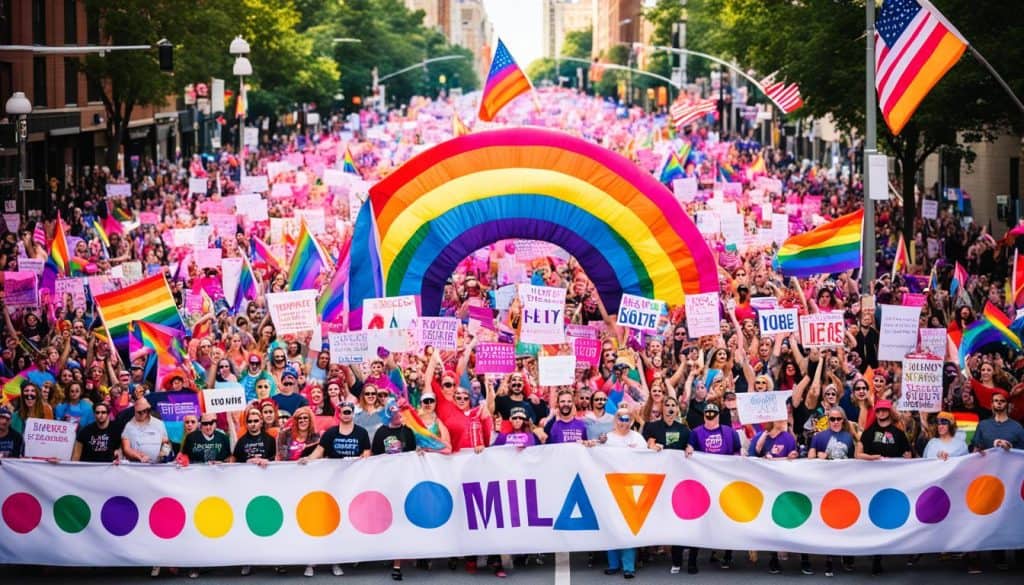
The 1970s sparked a major push for activism and visibility. A milestone came in 1973 when homosexuality was no longer deemed a mental illness. Then, Kathy Kozachenko made history in 1974 by winning a public office seat in Ann Arbor, Michigan. While facing strong opposition, like Anita Bryant’s anti-gay campaign in Florida, the community didn’t back down. In 1979, about 75,000 people marched in Washington for Lesbian and Gay Rights, showing their strength and determination.
The 1980s were a mix of progress and challenge. The AIDS crisis hit hard, but the push for rights continued. The Democratic National Convention in 1980 supported homosexual rights for the first time. Wisconsin then made history in 1982 by banning discrimination based on sexual orientation. Groups like ACT UP fought bravely for AIDS patients’ rights. The Ryan White Care Act in 1990 was a significant win, demonstrating the community’s ongoing fight against discrimination.
LGBTQ+ rights have also evolved in the social sphere. A survey shows that 57% of LGBTQ adults have faced slurs, and 51% encountered sexual harassment. This discrimination extends to biases about bathroom use and avoiding healthcare due to fear of prejudice. The battle for same-sex marriage stands out in this struggle. It’s a clear sign of the ongoing fight for equality. The journey for a fairer, more inclusive America is far from over, but advocacy keeps the hope alive.
The Impact of Legal Vulnerability on LGBTQ+ Individuals
LGBTQ+ people face legal challenges that leave them without clear help. They encounter discrimination at work and in finding a place to live. Legal protections for them are weak. There are many gaps in the laws. These gaps let inequality affect their lives every day.
Employment Discrimination
The rights of LGBTQ+ people at work are not fully protected by the law. In Texas, 27% of transgender people said they were fired, not promoted, or not hired because of their gender identity. This widespread discrimination harms their mental health. Almost 30% of LGBTQ+ adults in Texas have been diagnosed with depression. This is much higher than the 16.8% of non-LGBTQ+ adults.
“The lack of consistent legal protections perpetuates a hostile work environment for many LGBTQ+ individuals,” stated a Human Rights Campaign representative.
Housing and Access to Services
Housing discrimination is a big problem for transgender people in Texas, with 22% facing it in the last year. This contributes to the high number of LGBTQ+ homeless youth. They make up 20 to 40 percent of all homeless youth in the USA. Non-profits worry this group is at risk of being forced into prostitution.
About 30% of LGBTQ+ adults in Texas live on less than $24,000 a year. This shows the financial challenge they face because of discrimination. Also, 79% of people in Texas think LGBTQ+ people face discrimination. This adds to their marginalization.
Religious Exemptions and Their Implications
Some use religious freedom as a reason to discriminate against LGBTQ+ people. These exemptions make discrimination expected and legally allowed. They attack the dignity and health of LGBTQ+ people. They also create barriers to important services and fair treatment under the law.
To sum up, working together is key to help LGBTQ+ people face these legal challenges. Law enforcement, service providers, and LGBTQ+ groups must come together. They can offer specific help and fight the effects of these legal problems. This will make our society more welcoming and fair for everyone.
Recent Legislative Changes and their Effects on LGBTQ+ Rights
Recent changes in law have greatly impacted LGBTQ+ rights in the U.S. Key victories like the 2015 Supreme Court’s decision have granted marriage rights to all. Yet, the fight for equal rights faces many ups and downs across states.
Marriage Equality and Its Aftermath
The 2015 Supreme Court ruling on marriage was a big win for LGBTQ+ rights. It made same-sex marriage legal nationwide. However, this led to various state laws that challenge this progress.
For instance, Tennessee passed laws in May 2021 that affect transgender youth in sports. This includes HB 1223 and SB 1367. Oklahoma also passed laws in 2021, like SB 331 and SB 2, limiting transgender youth in sports.
State Laws: Protections and Loopholes
States have tried to protect LGBTQ+ rights but face hurdles. Some laws protect rights but also allow discrimination for religious reasons. Arizona and Ohio, for example, have proposed restricting healthcare for transgender youth. South Carolina is looking at laws that let healthcare deny service on religious grounds.
Some states, like Alaska and Florida, have tried to pass nondiscrimination laws but often fail. This leaves the LGBTQ+ community at risk for legal discrimination. Efforts to protect them continue, yet resistance remains strong.
In 2023, over 500 state bills targeted LGBTQ+ individuals. 75 of these became law. They impact areas such as healthcare, sports participation, and classroom discussions on gender identity. Despite this, some states like Florida and Georgia have seen temporary blocks against these laws. The push for fair and complete rights is ongoing and crucial.
The Role of Advocacy Groups in Promoting Equal Rights
Advocacy groups are crucial in fighting for equal rights, especially within the LGBTQ+ movement. Groups like the Human Rights Campaign (HRC) lead the way. They fight discrimination, push for legal changes, and support the public. Their actions empower the community and improve LGBTQ+ lives.
The HRC uses many strategies like getting people to vote, lobbying, and outreach. They show how working together can tackle big problems. For instance, they helped win a major court case against a school board’s unfair rule. This showed their commitment to transgender rights.
Advocacy groups also focus on educating the public and promoting acceptance. They use media and grassroots movements to their advantage. Their work has helped pass new laws in places like Finland, Spain, and Scotland. Now, transgender people in these countries can have their gender identity legally recognized.
These efforts are not just local but global. ILGA-Europe connects over 700 LGBT+ groups in 54 countries. Together, they fight against hate and unfair laws everywhere. They use public education, legal battles, and peaceful protests. They also create newspapers and magazines to spread the word and support LGBTQ+ rights.
The tireless effort of advocacy groups to spotlight important issues is key. They guide decision-makers towards better solutions. Their goal is to remove barriers and make society more inclusive for everyone.
Personal Stories of Overcoming Bias and Homophobia
It’s crucial to understand discrimination’s human side. Personal tales from the LGBTQ+ community offer deep insights. These stories show the resilience and courage needed to fight bias.
Brandiilyne Mangum-Dear’s Experience
Brandiilyne Mangum-Dear is a lesbian pastor from Mississippi. She’s overcome huge challenges because of who she loves. Her story is a beacon of LGBTQ+ resilience.
As a pastor, Brandiilyne blends faith with her identity. She works to create a welcoming space for everyone. Her journey shows both the strain of discrimination and the fight for justice and equality.
Petra E.’s Journey for Respect
Petra E.’s story is about fighting for respect. She faced harsh homophobia but never gave up. Her tale sheds light on LGBTQ+ struggles and their incredible determination.
By sharing her life, Petra helps us understand the importance of support. Her story is a powerful call for inclusivity and acceptance in our world.
The stories of overcoming bias are key to understanding LGBTQ+ lives. They vividly show how courage can face adversity. And they push forward the conversation on equality and rights.
LGBTQ+ Discrimination in a Global Context
Across the globe, acceptance and legal protections for LGBTQ+ rights vary widely. Some countries have made progress towards equality. However, others still impose harsh laws against LGBTQ+ people. Many places witness violence and discrimination against them, calling for a global human rights movement.
Comparative Analysis with Other Countries
In several countries, being LGBTQ+ can lead to severe penalties and exclusion. For example, Uganda has jailed homeless gay and transgender people under COVID-19 curfew breaches. In Panama, transgender people faced abuse from security during quarantine. The Philippines saw LGBTQ+ locals publicly shamed by officials for curfew violations.
Tanzania closed LGBTQ+ centers and banned health supplies like water-based lubricants. Japan requires transgender people to be sterilized to change their legal gender. Poland has areas declared as “LGBT-free zones,” and Russia blocks LGBT NGOs, affecting human rights. Brunei now punishes same-sex acts and adultery with death by stoning, showing some governments’ harsh stance.
Efforts of International Human Rights Organizations
Groups like Amnesty International are fighting these injustices. They run global campaigns to protect LGBTQ+ people from dangerous discrimination. They advocate for recognizing gender identities, decriminalizing homosexuality, and ensuring full protections globally.
Some successes have been seen, but the global LGBTQ+ rights struggle is ongoing. It needs strong advocacy and collaboration to push governments towards equality and safety for LGBTQ+ communities everywhere.