Labor Rights: Standing Up for Workers

Did you know South Carolina has the lowest union rate in the country at 2.9%? This fact points to a larger problem in the U.S. labor scene. It shows how worker advocacy and employee rights often get ignored.
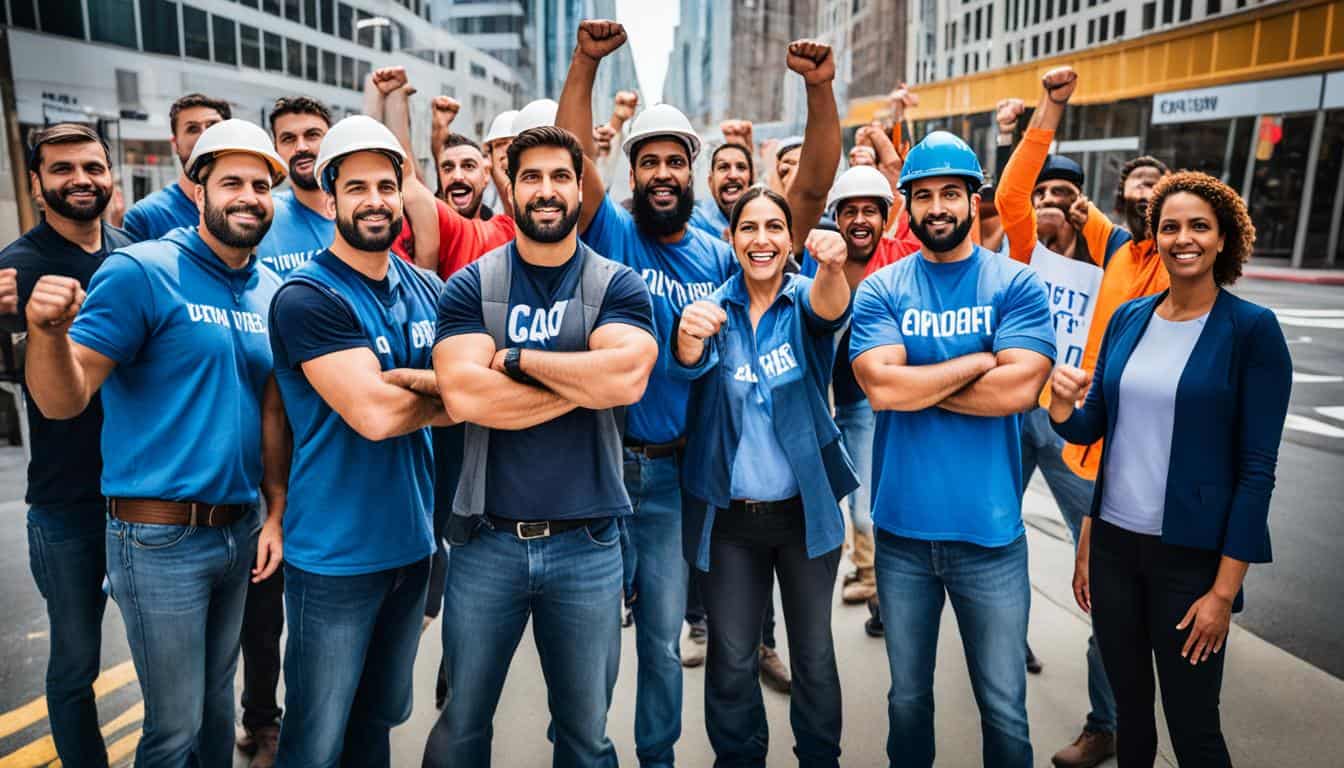
Fighting for labor rights is critical today. Groups like the Stand Up For Workers PAC lead this battle. They back candidates who support laws protecting workers and fair court rulings.
They focus on vital rights, such as fair pay and just treatment in court. This ensures workers’ concerns are taken seriously and valued.
This effort is seen in the effort to pass the Protecting the Right to Organize (PRO) Act. It aims to let workers host fair union votes without fear of employer backlash. This move is vital for supporting labor rights and treating every worker with respect.
The Importance of Worker Protection in the United States
Worker protection is crucial for a fair and just society. It boosts well-being and economic stability. Labor unions, political action committees, and state attorneys general are key in this. They advance Labor Rights Advocacy, enforce Employee Protection Legislation, and ensure Fair Wages.
Role of Labor Unions in Worker Protection
Labor unions lead the fight for worker protection in the U.S. They fight for fair pay, safe jobs, and good benefits. The AFL-CIO has pushed for laws that support workers’ rights.
Through collective bargaining, unions get better conditions and benefits. This helps all workers, even those not in unions.
Advocacy by Political Action Committees
Political Action Committees (PACs) focus on helping pro-worker candidates and policies. Stand Up For Workers PAC is one example. These PACs aim to improve laws on worker safety and fair pay.
They support leaders who value worker rights. Political action committees help workers by supporting these allies in government.
State Attorneys General and Their Increasing Involvement
The role of state attorneys general is growing. They tackle wage theft, wrong employee classification, and child labor. They’re active in industries like healthcare and construction to protect workers.
By using their legal powers, they help enforce worker protection laws. State attorneys general ensure workers get fair pay.
Labor unions, PACs, and state attorneys general work together for labor rights in the U.S. They aim for fair wages, strong protections, and respect. This teamwork makes better working conditions for every worker.
Employment Rights Every Worker Should Know
It’s vital to know your employment rights. Every worker should understand their protections under labor laws. This ensures fair treatment at work. Major laws include the Fair Labor Standards Act, the Family and Medical Leave Act, and Workers’ Compensation. They provide critical guidance on employee rights.
Fair Labor Standards Act (FLSA)
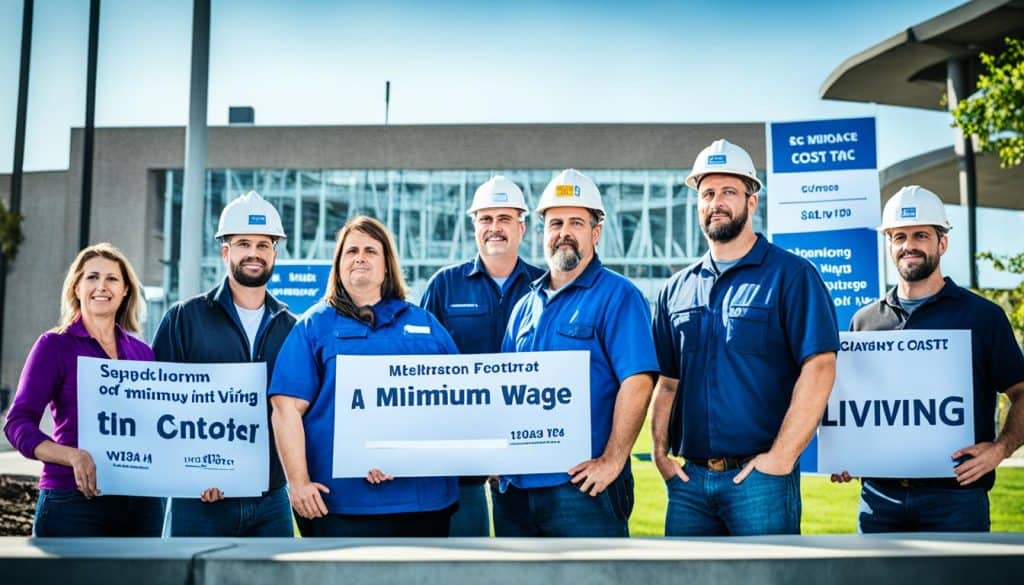
The Fair Labor Standards Act (FLSA) sets minimums for wages, working hours, and rules on child labor. It guarantees a worker won’t earn less than the federal minimum wage. Also, those working more than 40 hours a week must get overtime pay. Overtime is paid at one and a half times the normal rate.
‘Call-in pay’ is required if workers are sent home early. This is also true for those on split shifts or working over ten hours a day. They get ‘spread of hours’ pay. Employers must give a written notice of the pay rate when hiring. For certain projects with public funding, contractors must follow stricter pay and benefits rules.
Family and Medical Leave Act (FMLA)
The Family and Medical Leave Act (FMLA) allows eligible workers up to 12 weeks of unpaid leave. They can take this time for specific family and medical reasons, knowing their job is safe. In some places like New York, workers may get up to 12 weeks of paid leave. This Unpaid Leave Entitlement helps workers deal with personal or family health problems without risking their jobs.
Workers’ Compensation and Other Benefits
Workers get compensation if they’re sick or injured because of work. This can include cash benefits or medical care, highlighting the value of Occupational Health. There are also resources like the National Human Trafficking Hotline for forced labor victims.
In places like NYC, employees must get reasonable accommodations for disability or religious practices. Everyone has the right to equal pay for equal work and to talk about wages with colleagues. Employees can also organize without fear of employer retaliation. If someone loses their job, unemployment insurance provides temporary money for up to 26 weeks.
Employers have to offer health insurance and keep benefits during employment changes. Salary history bans stop bosses from asking about past wages during hiring. Also, employment agencies need licenses and must follow specific rules, like in NYC. Automated hiring tools in NYC must have bias audits and give proper notices.
The National Labor Relations Act (NLRA) covers most workers in the private sector, letting them form or join unions. It protects groups acting together for mutual employment benefits. Yet, some workers, like agricultural laborers or government employees, don’t get these protections. Supervisors also get protection if they’re discriminated against for not violating the NLRA.
Every worker, no matter the industry, should know these basic rights. This knowledge helps create a fair and justice-filled workplace.
Challenges Faced by Workers in the Modern Workplace
Workers today face many challenges in the changing work world. Problems like wage theft, wrong employee classification, and child labor laws being broken are huge. These issues make it hard for workers to have safe and fair jobs.

Wage Theft and Fair Pay Issues
Wage theft is a big issue across the U.S. Workers often don’t get the pay they deserve. This happens in many fields, like retail, healthcare, and building work. Some employers ignore the laws or use loopholes, leading to many workers not getting what they should.
It’s important to fight wage theft. Doing so makes sure workers get fair pay and legal protection.
Misclassification of Employees vs. Independent Contractors
Mistakenly classifying employees is also a big problem. Firms sometimes label staff as contractors to skip on benefits. This denies workers critical rights like health coverage and paid time off. It also makes income inequality worse. Fighting this is crucial, especially with more gig jobs now.
Child Labor Violations and Enforcement
It’s vital to enforce child labor laws well. Lately, more kids are working in risky jobs, especially in farming and making goods. State attorneys general have been tough on these cases, using big legal actions. Ensuring strong checks and tough penalties for breaking the law protects young workers.
The Role of State Attorneys General in Labor Rights
State attorneys general play a key role in protecting workers. They enforce Labor Legal Enforcement and Worker’s Rights Protection Laws. Their work is vital in fighting wage theft and making sure employers follow labor laws.
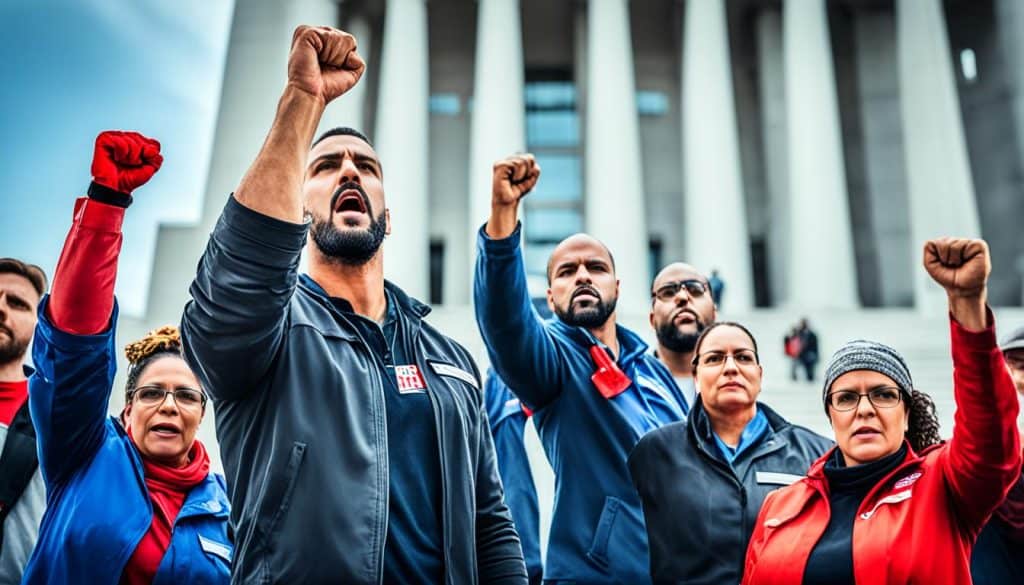
Over 2.4 million workers in big states get paid below the minimum wage. This shows how important legal action is. State attorneys general step in when federal efforts are not enough. In one case, the District of Columbia Attorney General got back $64,000 in unpaid wages for workers at a construction company. They also got $25,000 in interest.
There are far fewer federal wage and hour investigators now than in 1948. Back then, there was one for every 22,600 workers. Now, it’s one for every 135,000. This drop led to 63% fewer wage violation cases investigated from 1980 to 2015. States like California, New York, and Massachusetts have set up their own labor units to tackle this issue.
In 2017, the New York Attorney General took action against a home health care agency owner for wage theft. This led to a one-year jail term and over $135,000 recovered for 67 workers. Similar cases in Illinois and DC have also seen success, leading to better compliance in various industries.
State attorneys general have won big victories for workers needing paid sick leave. For example, in New York, efforts have recovered $18 million for home health aides. And in Massachusetts, $281,000 was recovered from an insulation company for not providing sick leave.
They have also tackled safety issues at work. This includes taking action against Amazon for safety violations and against GEO Group leading to a $23 million verdict for minimum wage violations. These are examples of the strong impact of Labor Legal Enforcement.
New laws at the state level give attorneys general more power to deal with labor issues. States like Colorado and Delaware are making sure worker protections keep up with economic changes. This means better support for workers across different industries.
Labor Unions: A Pillar of Worker Advocacy
Labor unions have always been key in fighting for workers. They’ve led to better work conditions and rights for employees. These achievements owe a lot to the dedication of unions.
Historical Impact of Labor Unions
The story of labor unions is filled with notable successes. Since the start of the *Labor Movement History*, they’ve pushed for higher wages and safer workplaces. The *Worker’s Collective Bargaining* has greatly benefited union members, boosting their wages by 11.2% more than those without a union. Black and Hispanic union members, for example, see wage increases of 13.7% and 20.1%, respectively.
Besides, union employers contribute 28% more to pension plans. And, members are much more likely to get employer-provided pensions. These facts highlight unions’ significant role in enhancing worker benefits.
Recent Achievements and Ongoing Efforts
In recent years, unions have kept making progress for workers. They have won fights for better wages and more benefits. This means union members enjoy 26% more vacation and 14% more paid leave.
The union wage benefit shows a premium of 15% to 25%, surveys indicate. Also, union workers are more likely to have health insurance from employers. These wins show unions’ continuous push to improve their members’ lives.
How Unions Adapt to Modern Workplace Challenges
Unions are keeping up as work changes. With COVID-19, they’ve fought for job security and safe work conditions. The virus led to high unemployment, hitting hard workers in low-paid jobs, women, and minority groups.
Unions are staying relevant with new tactics and digital tools. They push for government aid to help their members through hard times. Their ability to evolve ensures they still make a big difference in the *Labor Movement History*.
Standing Up for Your Labor Rights
Advocating for workers’ rights is crucial for a fair workplace. In the past few years, the gender wage gap widened, showing we must watch and act. Staying updated on Labor Legislation and changes is key to protecting your rights.
Knowledge really is power. Learn about important laws like the Fair Labor Standards Act and the Family and Medical Leave Act. These laws help set fair work standards and prevent child labor in some jobs. It’s vital to know about and report wrongs like wage theft and employee misclassification.
Experiencing harassment for union activities is illegal. It’s wrong for employers to threaten, interrogate, or promise benefits to stop union support. The National Labor Relations Act fights these wrongs. Understand your rights to defend them and reach out to unions or groups for help. Learn and understand to make workplaces fair for everyone.