Global Health: Tackling Issues Beyond Borders

Did you know that two-thirds of US funders do not use global ideas in their grants? This fact shows we need to better include global thoughts in health. Global health aims for health equity for everyone, everywhere.
It looks at physical, mental, and social well-being for all. Global health goes beyond one country, tackling worldwide health issues. These include diseases and climate change effects.
To solve these tough issues, we need experts from many fields. They work together, aiming to reduce health differences and improve health for all globally.
Partnerships are key in global health. They mix different skills and views, helping share knowledge and solutions. For example, Rwanda saw a big drop in maternal deaths, and many cities are fighting climate change together.
I am fully committed to this global effort. I believe that working together is crucial to help communities worldwide stay healthy.
The Importance of Global Health Governance
Global health governance tackles the health effects of globalization. It relies on organizations like the World Health Organization (WHO) and partnerships. These groups work together to make global health better. Having everyone involved is crucial for good health outcomes worldwide. This shows why we must focus on enhancing WHO’s leadership.
Role of Institutions and Processes
The World Health Organization leads the way in global health actions. They’ve helped in over 100 national discussions. This brings many players, including businesses and charities, to the table. The goal is to make sure health efforts worldwide are united and well-managed by WHO.
The Impact of Weak Health Systems
The Ebola outbreak in 2014 showed the problems of weak health systems. It revealed big issues for both local and global responses. In places like Africa and South Asia, the need for more healthcare workers is clear. Investing in these workers is key to handle health crises and protect the needy.
Enhancing Coordination and Collaboration
Better teamwork among health organizations is essential. It helps avoid waste, boosts efficiency, and makes sure decisions help those in need. Hosting health summits can improve global efforts against common health problems. Leaders should organize these events and push for health topics to be discussed. Regular health conferences can then better support worldwide health missions.
Epidemics: Transnational Threats
Infectious diseases are a huge global problem that go beyond borders. This requires a united, worldwide effort. Epidemics call for quick, organized moves to stop them from harming many people. The fight against diseases, like Ebola and malaria, shows we need better vaccines and global health plans now more than ever.
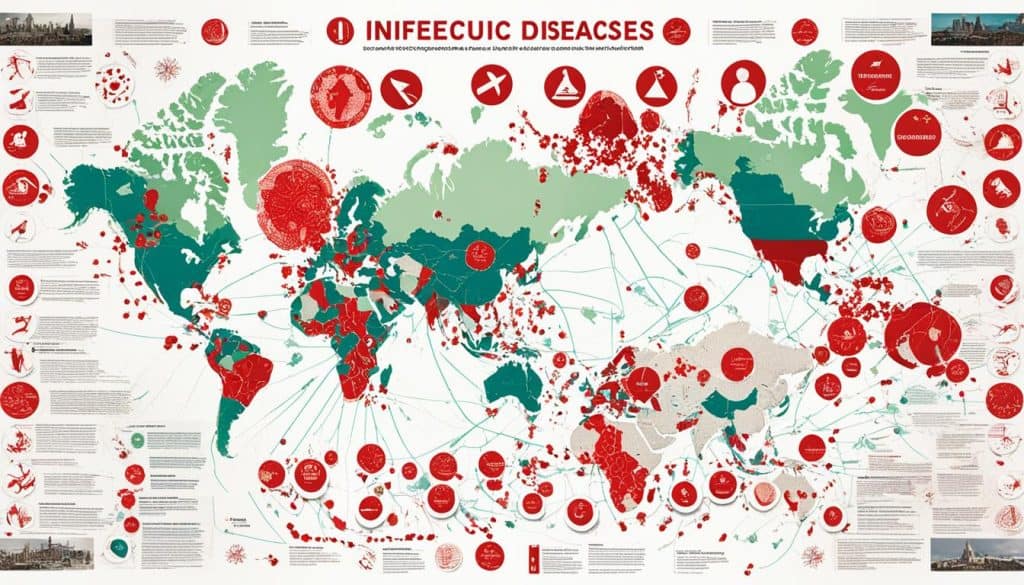
Case Study: The Ebola Crisis
The Ebola outbreak showed us how weak healthcare can make diseases much worse. Between 2014 and 2016, in West Africa, the Ebola virus spread fast because there wasn’t enough money for health and the healthcare systems were poor. This resulted in terrible losses. Recently, 155 out of 195 countries did not spend enough to get ready for epidemics in the last three years. Strengthening health systems is crucial, a point made clear by the CDC and over 70 countries through the GHSA.
Global Efforts Against Malaria
Battling malaria is a big challenge that needs new science and better health policies. With malaria getting resistant to drugs, finding vaccines is more urgent. Yet, only a quarter of the countries have updated their health team plans in the last five years. The world is trying to fix this by putting money into better healthcare and making sure systems are ready for new threats.
Current Trends in Emerging Infectious Diseases
New diseases are a growing problem, made worse by globalization, drug resistance, and dangerous pathogens getting out. It’s worrying that 73% of countries don’t have quick approval processes for health emergencies. Also, 126 countries don’t have a plan for dealing with pandemics. The CDC’s Global Health Protection goal is to improve preparedness, including labs and emergency management, to keep everyone safer.
Global Health Policies and Their Impacts
In the world of global health, making policies is key to successful public health programs and better health for all. Governments decide how to spend their health budgets and create plans to tackle health problems. These decisions and plans help improve health care around the world.
Public Health Policy Development
Public health policy-making involves putting together plans based on evidence to solve health issues. The U.S. spreads its global health budget over different areas like HIV/AIDS (including PEPFAR), tuberculosis, and child health. They use data from sources like the KFF Global Health Budget Summaries and the PEPFAR Policy Resource Hub to make informed decisions.
Strengthening National Health Systems
Improving national health systems is crucial. It focuses on the basic structure and services needed for good health care. The U.S. boosts its health systems through programs like the President’s Malaria Initiative. This strategy aims to solve big health system problems and make the systems strong against health issues.
Case Examples and Success Events
Looking at successful policies worldwide shows the power of putting good policies into action. For example, PEPFAR has greatly helped in the fight against HIV/AIDS since 2003. The U.S. has also made great strides in battling TB and malaria. Their well-executed policies have improved health a lot.
By improving and applying strong health policies, countries can get better health results. This shows that reforms in health systems really work on a global level.
The Role of International Aid in Health Outcomes
International humanitarian aid is key to better health, especially where resources are scarce. Governments and non-governmental organizations (NGOs) work together to make sure aid reaches those in dire need. This teamwork helps overcome gaps and provides fair health solutions.
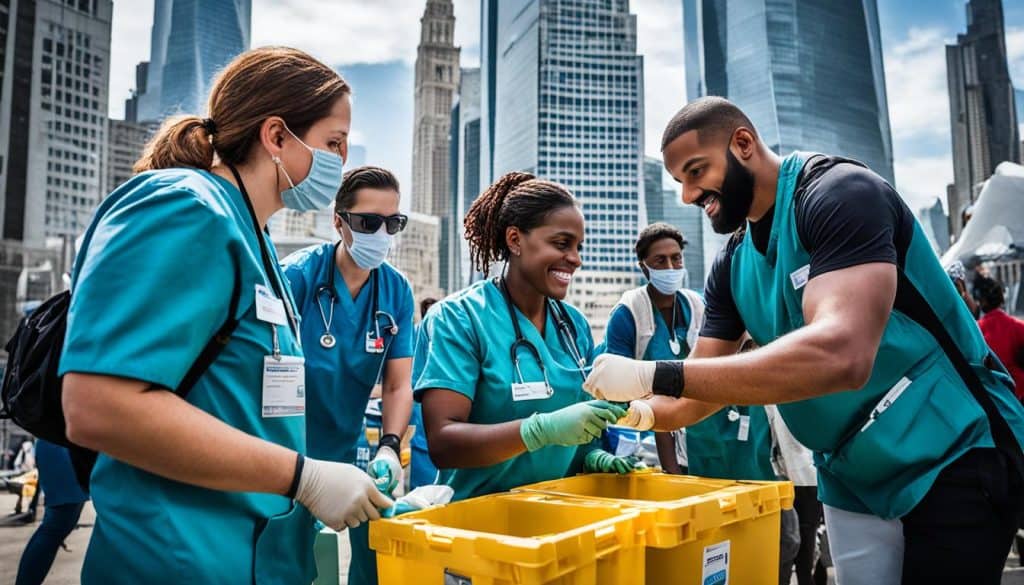
Collaboration Between Governments and NGOs
Government and NGO partnerships are crucial to aid effectiveness. Initiatives like Gavi and the Robert Wood Johnson Foundation improve health outcomes. They ensure aid gets to those who need it quickly and without waste. Working together yields better results than acting alone.
Funding and Resource Allocation
Smart funding is essential for lasting health improvements. Data shows life expectancy rises and child mortality drops with increased health aid. From 1974 to 2010, a 1% boost in aid made a significant difference. Adding $1 billion in aid could save 364,800 children under 5.
Between 2010-2011, health aid levels stalled, showing the need for steady funding. Health aid grew from $5.7 billion annually in 1990 to $28.2 billion in 2010. This growth highlights the positive impact of committing more funds. Such investments ensure health benefits continue long after the initial aid.
“Health aid increased as a percentage of non-military aid from 6.8% in 2000 to 12.9% in 2010.”
Effective funding and resource allocation are crucial for global health progress. Past data showcase the clear advantages of ongoing aid and stress the importance of continued global teamwork.
Global Health: Tackling Issues Beyond Borders
Our world faces many health challenges that need a global view to solve. It’s important to look beyond our own countries. For example, the Chinese barefoot doctor model has shown us a new way to build health systems. This idea has become key to health care all around the globe.
The World Health Statistics 2024 report looks at more than 50 health indicators. These are tied to the Sustainable Development Goals (SDGs) and the WHO’s work. It shows how sharing knowledge globally can help us tackle health inequalities better. Working together and sharing ideas is crucial in our fight against health issues.
The Mobile Health program by Fogarty is a great model of global cooperation. It has led to significant findings in digital health across 42 countries. With 269 published works and five patents, this project shows what we can achieve together. It also includes big achievements like decoding the first SARS-CoV-2 strain in Nigeria.
Looking at health issues with a global perspective allows us to share solutions and experiences. By embracing innovation and learning from each other, we can improve health worldwide. This approach reminds us that unity makes us stronger in facing global health challenges.