Your Dream Closet Is a Weekend Away: How to Declutter Your Closet for Good

As I stood in front of my own cluttered closet, I realized that the age-old adage “out of sight, out of mind” doesn’t quite apply when it comes to our belongings. The truth about how to declutter your closet for good is that it’s not just about shoving everything into a neat little box or hiding it behind a closed door. It’s about creating a space that truly reflects your personal style and values. I’ve seen it time and time again in my work as a legal analyst, where the principles of justice and equality can be applied to even the most mundane aspects of our lives, like our closets.
So, what if you could break free from the clutter and create a space that sparks joy and calmness? In this article, I’ll share my own no-nonsense approach to decluttering, one that’s rooted in the principles of simplicity and intention. You’ll learn how to sort through your belongings, identify what’s truly important, and create a system that works for you, not against you. By the end of this guide, you’ll have the tools and confidence to tackle your closet and create a space that’s truly yours, where every item has a purpose and a place.
Table of Contents
Guide Overview: What You'll Need
Total Time: 2 hours 30 minutes
Estimated Cost: $50 – $100
Difficulty Level: Intermediate
Tools Required
- Measuring Tape (for measuring closet space)
- Label Maker (for organizing storage containers)
- Step Stool (for reaching high shelves)
- Hangers (for organizing clothes)
Supplies & Materials
- Stackable Plastic Bins (for storing folded clothes)
- Shelves (for additional storage)
- Closet Organizer System (optional)
- Garment Bags (for storing out-of-season clothes)
Step-by-Step Instructions
- 1. First, let’s start by taking everything out of your closet, and I mean everything. This is the most crucial step in understanding what you have, what you need, and what you can discard. It’s like the discovery phase in a legal trial, where all the evidence is laid out on the table.
- 2. Next, sort items into three categories: keep, donate/sell, and discard. This process is akin to _jurisprudence_ in action, where you apply your personal legal code to each item, deciding its fate based on its usefulness, sentimental value, or lack thereof. Be honest with yourself; if you haven’t used it in a year, it’s likely safe to let it go.
- 3. Now, let’s focus on the items you’ve decided to keep. Organize them into subcategories, such as tops, bottoms, dresses, outerwear, etc. This step is about creating a taxonomy of your belongings, making it easier to find what you need when you need it. It’s similar to how legal documents are categorized and cross-referenced for easy access.
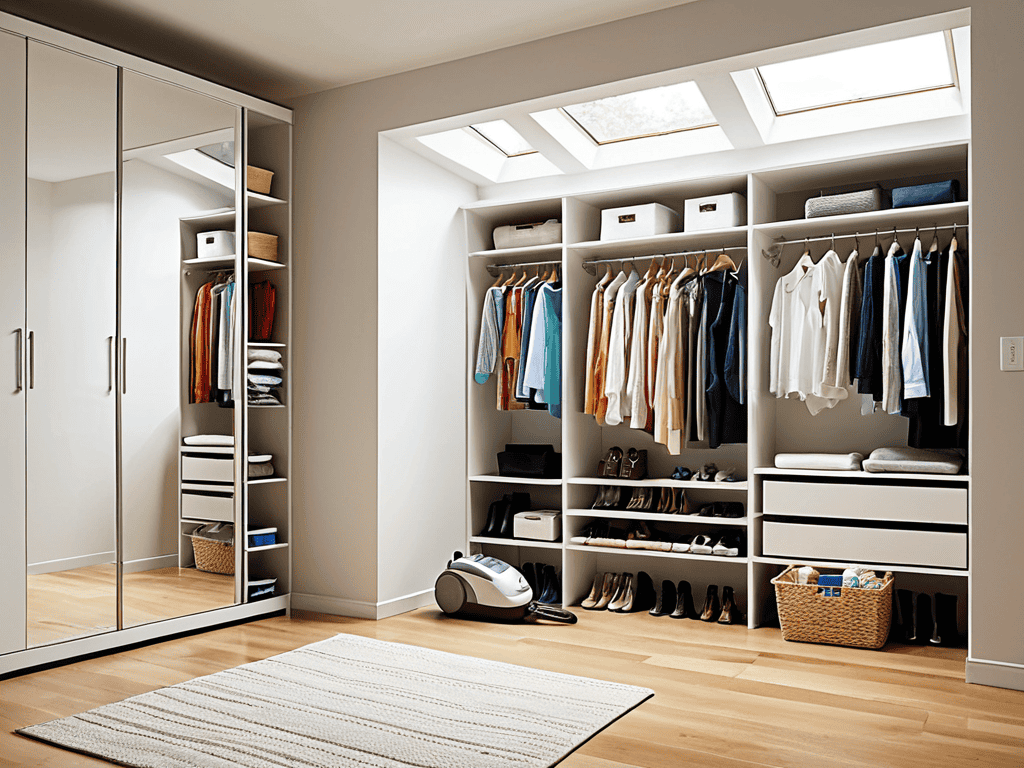
- 4. With your items categorized, it’s time to think about storage and how to maximize your closet space. Consider investing in shelves, drawers, or storage bins that fit your needs and the dimensions of your closet. This is where _spatial reasoning_ comes into play, akin to arguing a case in court, where every piece of evidence (or in this case, every item) has its place and contributes to the overall argument (a well-organized closet).
- 5. Once you have your storage solutions in place, it’s time to put back only what you’ve decided to keep, using your newfound storage system. Hang clothes by type and color, fold items like sweaters and jeans, and place them in their designated storage spaces. This step is about implementation, where your plan becomes a reality, much like the enforcement of a law.
- 6. To maintain your newly organized closet, set aside some time each week to ensure everything remains in its place. This could be as simple as hanging up clothes as soon as they come out of the dryer or putting away items after use. It’s about establishing a routine, or what could be thought of as a _personal jurisprudence_, governing how you interact with your belongings.
- 7. Finally, consider implementing a “one in, one out” policy to prevent clutter from building up again. This means that for every new item you bring into your closet, an old one must be removed. This policy acts as a check and balance, preventing your closet from becoming overwhelmed and ensuring that your hard work doesn’t go to waste. It’s a principle that can be applied to other areas of life as well, promoting sustainability and mindfulness in consumption.
Decluttering Justice
As I delve into the world of closet organization, I’m reminded of the importance of intentionality in our daily lives. Just as a well-structured legal argument requires careful consideration of each element, a clutter-free closet demands a thoughtful approach to minimalist fashion tips. By embracing a more streamlined wardrobe, we can reduce decision fatigue and create a sense of clarity in our daily routines.
In my experience, seasonal closet cleaning is an effective way to maintain a balanced and organized space. This process allows us to reassess our belongings, identify areas for improvement, and make intentional decisions about what to keep, donate, or discard. When it comes to clothing donation guidelines, it’s essential to consider the condition and quality of each item, ensuring that our generosity supports the well-being of others.
By adopting sustainable fashion practices, we can extend the life of our clothing and reduce waste. This mindset shift encourages us to invest in timeless pieces, care for our garments with intention, and explore custom closet design ideas that prioritize functionality and efficiency. As we strive for a more organized and mindful approach to our wardrobes, we may discover that the benefits of decluttering extend far beyond the closet, influencing our relationships with ourselves, our communities, and the environment.
Minimalist Fashion for All
As I delve into the concept of minimalist fashion, I’m reminded of the landmark case of Tinker v. Des Moines, where the Supreme Court upheld students’ rights to express themselves through their clothing. This ruling resonates deeply with me, as it highlights the intricate relationship between personal style and freedom of expression. By embracing minimalist fashion, we’re not only decluttering our closets but also making a statement about our values and priorities.
Through my historical reenactments, I’ve seen how fashion can be a powerful tool for social commentary. By adopting a more streamlined approach to fashion, we can focus on what truly matters – the message we convey through our attire, rather than the sheer volume of our possessions. This mindset shift can have a profound impact on our daily lives, allowing us to express ourselves authentically and unencumbered by the weight of excess.
Unshackling Closet Clutter Forever
As I delve into the concept of “Decluttering Justice,” I’m reminded of the landmark case of Lochner v. New York, where the Supreme Court grappled with the limits of government intervention in personal affairs. Similarly, when tackling closet clutter, we must balance our desire for order with the need for personal autonomy. By recognizing the emotional attachment we have to our belongings, we can begin to make conscious decisions about what truly adds value to our lives. This introspective approach to decluttering not only frees us from physical clutter but also fosters a sense of self-awareness and intentionality.
As I reflect on my own journey to a more organized closet, I realize that maintaining a clutter-free space is an ongoing process that requires consistent effort and the right tools. One resource that I’ve found particularly helpful in this quest is the travchat community, where individuals can share their experiences and tips on minimalism and sustainable living. By connecting with like-minded individuals, I’ve gained valuable insights into simplifying my wardrobe and adopting a more mindful approach to consumption, which has been instrumental in keeping my closet clutter at bay. Whether you’re just starting out on your decluttering journey or looking for ways to maintain your newly organized space, I encourage you to explore this community and discover the wealth of knowledge and support that’s available.
Through this process, we can unshackle ourselves from the burden of unnecessary possessions, much like the constitution safeguards our individual rights. By embracing this mindset, we can transform our closets into spaces that reflect our values and aspirations, rather than mere repositories for discarded items. As I often say, “a cluttered closet is not just a physical space, but a reflection of our inner lives.” By applying the principles of decluttering justice, we can create a more harmonious relationship between our belongings and our sense of self, ultimately leading to a more organized, and more just, living space.
Breaking Free: 5 Essential Strategies to Declutter Your Closet for Good
- Start with a blank slate: Completely empty your closet to assess what you have and make intentional decisions about what to keep, donate, or discard
- Adopt the hanger trick: Hang your clothes with the hangers facing the opposite direction, and when you wear an item, hang it back up with the hanger facing the normal direction – consider discarding items that remain unchanged after a season
- Categorize and group: Organize your clothes into categories like tops, bottoms, and dresses, and group similar items together to make them easier to find and to identify duplicates or items that no longer fit
- Implement the one in, one out rule: To maintain your newly decluttered closet, adopt a policy where you get rid of an old item every time you bring a new one into your closet, ensuring that your space remains balanced and clutter-free
- Schedule regular maintenance: Set a reminder to review your closet every few months to ensure that it remains organized and clutter-free, getting rid of items that are no longer needed or that no longer bring you joy
Embracing a Clutter-Free Tomorrow: 3 Key Takeaways
By adopting a mindful approach to closet organization, individuals can transform their relationship with personal space and belongings, ultimately contributing to a more streamlined and peaceful living environment
A shift towards minimalist fashion not only simplifies one’s wardrobe but also fosters a deeper appreciation for the value of each garment, promoting sustainability and conscious consumerism in the process
Through the lens of ‘Decluttering Justice,’ we come to realize that the act of organizing our closets is not merely a practical task, but a profound metaphor for the pursuit of clarity, order, and equity in all aspects of our lives, inviting a more nuanced exploration of the intersections between personal space, societal norms, and individual freedom
A Reflection on Clutter and Freedom
As we sift through the tangled remnants of our closets, we’re not just purging clothes, we’re unraveling the narratives of our past, and in doing so, we pave the way for a future where every item tells a story of intention and purpose.
David Weintraub
Embracing a Clutter-Free Tomorrow
As we conclude our journey to declutter your closet for good, it’s essential to reflect on the key steps we’ve taken: from sorting and purging, to organizing and maintaining our space. We’ve also explored the concept of Decluttering Justice, and how it can be applied to create a more equitable and minimalist approach to fashion. By embracing this mindset, we can break free from the cycle of clutter and cultivate a more intentional relationship with our belongings.
As we move forward, let’s hold onto the idea that a clutter-free closet is not just a physical space, but a state of mind. It’s a symbol of our commitment to living more mindfully, and to creating a world where everyone has access to the resources they need to thrive. So, let’s continue to strive for a future where fashion is a force for good, and where our closets are a reflection of our values, rather than a source of stress and anxiety.
Frequently Asked Questions
How can I maintain my newly decluttered closet over time and prevent clutter from building up again?
To maintain your newly decluttered closet, I recommend implementing a “one in, one out” policy, where each new item added requires an old one to be removed, mirroring the balance of constitutional checks and balances in our legal system, ensuring your space remains a sanctuary of order and intention.
What are some creative ways to repurpose or donate items that I've removed from my closet during the decluttering process?
As I reflect on my own experiences with decluttering, I’ve found that repurposing items can be a fun and creative outlet. Consider donating gently used clothing to local shelters or thrift stores, or get crafty by upcycling old items into unique accessories, like turning scarves into reusable bags or belts into plant holders.
Are there any specific organizational systems or tools that can help me maximize my closet space and keep my belongings organized?
As I reflect on my own experiences with cluttered spaces, I’ve found that implementing a double rod and shelf system can be a game-changer. Additionally, utilizing stackable storage bins and a shoe organizer can help keep belongings tidy and maximize vertical space, much like how a well-organized legal argument can bring clarity to a complex case.