Agricultural Policies: Balancing Sustainability and Production

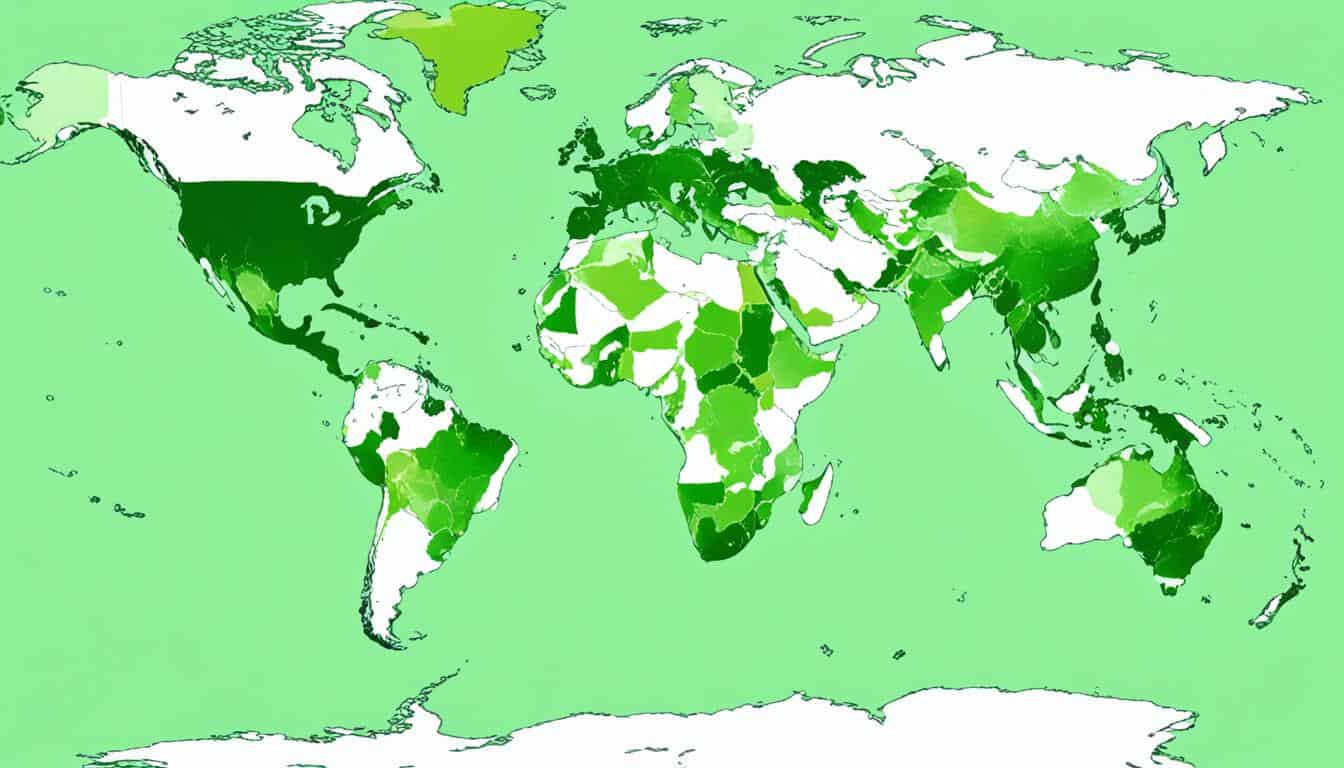
Did you know the world spends about $800 billion each year on agriculture? But over 700 million people are still hungry, says the UN’s FAO. This shows we need policies that boost farm growth and are good for the planet too.
Gwendolen DeBoe’s OECD report says agri-policies are key for the sector’s environmental health and productivity. They must balance economic needs, different local conditions, and how land is used. Even if policies sometimes clash, they can still make farming more efficient and sustainable.
It’s clear that wise policy changes are needed when we look around the world. Ghana is working on giving farmers better credit to create jobs and lessen imports. The EU is focusing on being green, with a big chunk of its farm budget going to help the planet.
Around the world, people agree: we must use resources wisely to grow food sustainably. If we get the balance right, farm policies can make sure the future is both green and productive.
The Role of Agricultural Policies in Promoting Sustainable Farming Practices
Agricultural policies are key to sustainable farming. They target a balance of healthy environment, profit, and fairness. These policies guide the adoption of ecological methods, boosting both farm output and environmental protection.
Promoting Environmental Stewardship
Agri-environmental policies push for better care of our planet. They encourage practices like carbon storage and helping bees pollinate. About 20% of sustainable farming efforts focus on improving soil, saving water, and cutting farm pollution. Policies also reward green farming methods, leading to more use of water-saving crops and systems. This helps tackle water problems such as salinization and pesticide risks.
Supporting Biodiversity
Farming changes can boost biodiversity. Policies urge farmers to mix plant and animal production in a way that feeds us and protects nature. Federal laws in the U.S. play a role by defining crucial sustainable practices. They support soil conservation and better soil health and pest management.
In the last twenty years, more farms have moved toward sustainable methods. These efforts focus on environmental and social issues. Sustainable policies address soil loss, water pollution, and the struggle of family farms. Their goal is to make life better for farmers and everyone.
Agricultural Policies and Their Environmental Impact
Agricultural policies heavily impact environmental sustainability. They focus on reducing greenhouse gas emissions and better managing water. Such policies can either help promote sustainable practices or cause harm to the environment.
Greenhouse Gas Emissions
Agricultural policies are key in controlling farming’s greenhouse gas emissions. For example, European Union countries have over 90 agricultural policies each. These strict rules help lower emissions. Countries like those in Europe and the United States use lots of fertilizers and pesticides. They need strong policies to lessen their environmental effects. Europe and China have cut down on fertilizer and pesticide use without harming farm yields.
But, some policies can cause problems. Sri Lanka’s ban on chemical fertilizers led to food shortages and an economic crisis. Also, switching entirely to organic farming in England and Wales might raise global emissions. This shows how tricky it is to craft policies that help the planet both locally and globally.
Water Resource Management
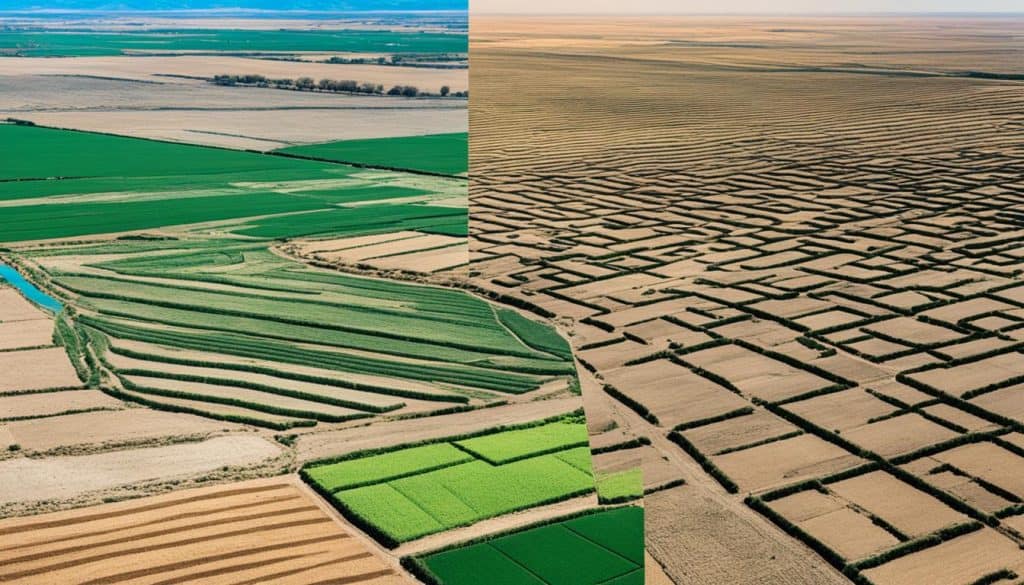
Managing water resources well is essential for agriculture’s future. Policies that promote efficient water use can protect resources from being overused. In the United States, the Conservation Reserve Program paid farmers $1.7 billion in 2005. This was to stop farming on 1.8% of the nation’s cropland, aiding water conservation.
On the other hand, some policies have negative effects. They encourage farming on environmentally sensitive lands, like wetlands. Because of this, around 37,000 acres of wetlands were turned into farmland from 1992 to 1997. This harmed water quality. From 1990 to 2003, the push for more crop insurance subsidies increased farmland. It led to more nutrient pollution and groundwater contamination. Such moves to boost productivity can hurt the environment if not thoughtfully managed.
Balancing Food Security and Environmental Sustainability
Working on food security while protecting the environment is key for future farming. Over 40% of rural folks live in areas with little water, mainly due to farming. We need policies that support sustainable farming methods.
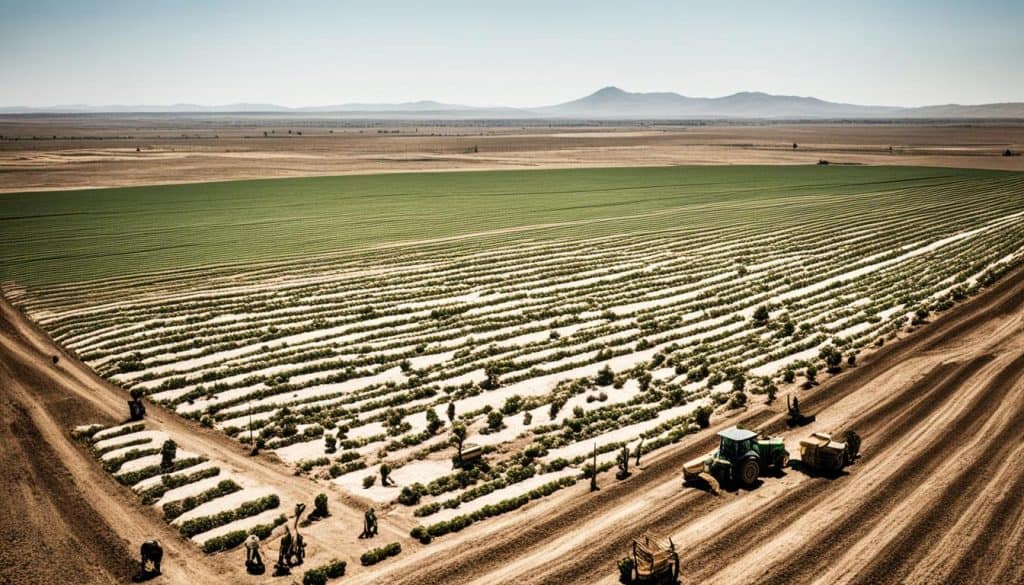
Every year, soil erosion wipes out 10 million hectares of farmland. About 40% of this loss comes from tillage erosion. Also, climate change hurts food security by impacting crops, livestock, health, and fisheries. This is very true in sub-Saharan Africa and South Asia. We must act against climate change to keep our food and environment safe.
Intense farming is causing genetic erosion in 60 countries. Policies should boost agricultural biodiversity to fight climate change and keep up food production. Also, food waste uses 28% of the world’s farm area and adds 8% to global greenhouse gases. By cutting this waste, we could feed a billion more people. This shows big chances for food security and protecting our planet.
As our population nears 10 billion by 2050, we need big changes in how we get our food. Modern farming has problems like more greenhouse gases, soil loss, and water issues. We should farm in a way that’s good for the planet and cuts food waste. This will help feed everyone without hurting the environment.
To farm sustainably, we must use natural resources wisely, invent new tech, and keep a balance between growing food and saving nature. There’s a $400 billion chance in reducing food waste, showing the good in sustainable farming. Farming’s future depends on being eco-friendly, fair, and money-wise while caring for nature today and tomorrow.
Agricultural Policies
Agricultural policies are key to making farming more resistant to climate change. The U.S. farms follow a 5-year plan through Farm Bills. The 2018 version updated from 2014 supports different areas like crop safety, care for land, and overseas trade. It’s essential that these laws help farms adapt but also protect our environment for years to come.
Adaptive Capacity
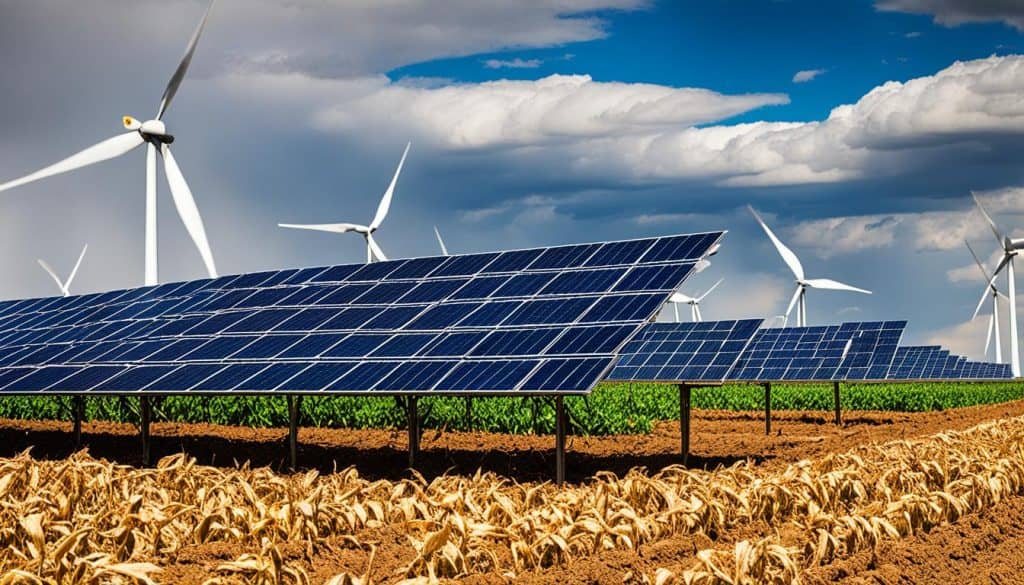
To tackle climate change, farms need to adjust. Policies should include ways to lessen the bad effects while boosting food supply. By choosing tougher crops and better farming ways, we can keep food coming. The FAO suggests cutting down farm gases to tackle their big role in global emissions. The 2018 Agriculture Act focuses on continuing and bettering care for land, forests, and crop safety acts.
Implementation of Best Practices
Using the best farming methods is vital for today’s yields and tomorrow’s earth. The 2018 Farm Bill helps farmers use these good processes by providing programs. These include looking after soil, managing water, and saving different plants and animals.
Making these programs work well often means creating new rules and training people. This ensures the plans work as they should. Furthermore, laws made outside of Farm Bill years help with unexpected problems, showing how farming laws are always evolving.
Agricultural laws are designed to support farms now and in the future. Merging smart strategies with proven practices is crucial for a lasting farming approach.
Case Studies: The Impact of Agricultural Policies in Different Regions
I look into how agricultural policies affect different areas, focusing on studies from the OECD and FAO. These policies have had various effects on farm productivity and environmental sustainability. The OECD’s Producer Support Estimate (PSE) helps us see how subsidies and supports impact agriculture.
The report highlights a crucial point: policies greatly influence farm efficiency and productivity. For example, shifting subsidies towards eco-friendly methods boosts both efficiency and productivity. These shifts can change prices, income, and risk, pushing farmers towards sustainable farming.
Additionally, these case studies show that policies can improve environmental outcomes by encouraging better land and production methods. Practices that support carbon storage, disaster resilience, and pollination have benefited from such policies. Yet, the success of these policies often depends on the unique conditions of each region. Tailoring policies to local needs is key for balancing productivity with environmental care.