
Transportation Law: New, Safer Roads Ahead

Imagine a scenario: you’re driving on a sunny day when suddenly, there’s an obstacle. It could be a child chasing a ball or a car stopping suddenly. These moments show the importance of advanced road safety.
About 95% of transportation deaths happen on our streets. This highlights the urgent need for new transportation laws and road safety improvements. The National Highway Traffic Safety Administration (NHTSA) has introduced new rules to make our roads safer through vehicle regulation improvements and traffic law updates.
A key change is making Automatic Emergency Braking (AEB) systems standard in new cars, including SUVs and trucks, by September 2029. This will not just meet safety standards better, but also save at least 360 lives, prevent 24,000 injuries, and cut property damage by over $5 billion a year.
Key Takeaways
- 95% of transportation fatalities happen on roads, underscoring the need for safety improvements.
- The AEB system mandate by NHTSA aims to save lives and prevent injuries each year.
- New laws are a big part of the Bipartisan Infrastructure Law and road safety strategies.
- In FY22, important funds are set aside to help reduce accidents on the road.
- Enhanced safety measures will greatly change how vehicles and traffic laws are regulated.
Introduction to New Safety Standards in Transportation Law
The Department of Transportation (DOT) is taking big steps to make our roads safer. They’ve introduced new traffic laws and safety rules. These changes use updated regulations and new technology to improve road safety. Let’s explore the major changes and why they matter.
Overview of the Changes
By 2029, new vehicles must have automatic emergency braking (AEB) technology. This rule was set by the National Highway Traffic Safety Administration (NHTSA). It’s part of a larger plan to boost safety with new solutions. AEB can stop a car automatically to avoid crashes with cars or people. It works day and night, making it safer for people walking after dark.

Importance of Updated Safety Regulations
Making our roads safer is essential. U.S. Transportation Secretary Pete Buttigieg supports the new emergency braking rules. They are a key part of the National Roadway Safety Strategy. This plan aims to reduce the high number of deaths on the road. It’s important to use new technologies in cars to protect everyone.
The Assistant Secretary for Transportation Policy ensures these safety plans work well. This office looks at how these rules affect transportation in the U.S. They aim to cut down on deaths by encouraging safe driving. The National Roadway Safety Strategy uses the Safe System Approach. It focuses on stopping deadly crashes. Working together with states and local areas is key to making roads safer for all.
Automatic Emergency Braking (AEB): A Game Changer
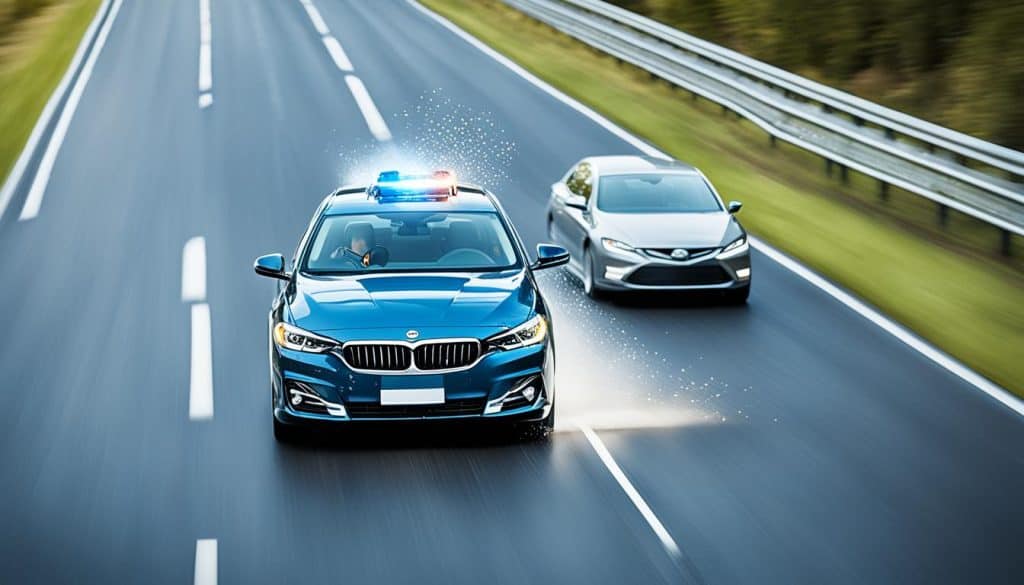
Making automatic emergency braking (AEB) a must in new vehicles is a huge step for safer roads and fewer deaths. By September 2029, all passenger cars, SUVs, and light trucks must have AEB, as per new safety rules. This move is a key achievement in reducing crashes.
Details of the AEB Standard
The AEB standard has many parts focused on stopping crashes and making it safer for pedestrians. Cars will be able to stop on their own and dodge hits with other vehicles going up to 60 miles per hour. Also, the system can spot pedestrians and brake on its own at speeds up to 45 miles per hour. This effort is part of a bigger plan to cut down on road accidents.
Projected Impact on Road Safety
Adding AEB technology is expected to do a lot more than just stop immediate crashes. It’s predicted to save at least 360 lives each year and prevent around 24,000 injuries. Plus, it could save us over $5 billion yearly by reducing damage from rear hits and pedestrian accidents. These numbers show how big of a change AEB technology could bring in making our roads safer.
New sensor technologies and automatic systems are key to this safety upgrade. With AEB technology in place, car safety and road infrastructure are expected to improve greatly, making for safer travel for all.
Implementation Timeline for New Vehicle Regulations
Moving to new safety rules for cars is a big task. Automakers need to make many changes. Knowing the vehicle safety compliance timeline is important for both the people who make cars and those who buy them. By September 2029, cars, SUVs, and light trucks must all have Automatic Emergency Braking (AEB) systems, says the National Highway Traffic Safety Administration (NHTSA).
Key Deadlines Automakers Need to Meet
The first important regulatory deadlines start in 2022. Here, the rules are just beginning. Then, tougher steps come in, making sure every new car model has AEB technology. Automakers need to follow these steps. If they don’t, they could be fined and not be ready for the market. They have to plan their car making to match these deadlines.
Phases of Implementation
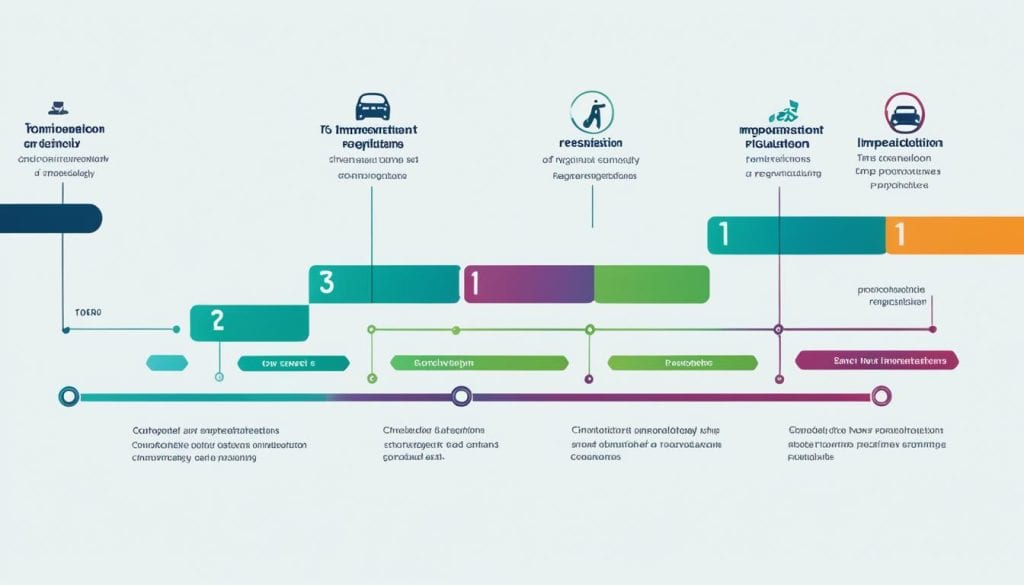
The phased safety regulation implementation makes things easier. It starts with putting AEB systems in cars that sell a lot. Then, it moves to the next levels of cars. This order helps car makers deal with making the cars, from designing changes to training car dealers. Each step is planned well. It increases AEB use, leading up to the 2029 full compliance date.
By following this detailed plan, car makers can meet the vehicle safety compliance timeline. This makes our roads safer for everyone, step by step.
Transportation Law and Federal and Federal Guidelines
New updates in transportation law have introduced the AEB standard. It follows Federal guidelines to make roads safer. The Bipartisan Infrastructure Law leads these updates with its National Roadway Safety Strategy. This strategy focuses on safer roads, vehicles, speeds, and better care after crashes. It aims to reduce traffic deaths across the country.
Federal safety standards come from different laws to protect all road users. For instance, the Department of Transportation’s 49 CFR 21 stops discrimination in federally-assisted programs. It requires equal treatment for everyone, regardless of race, color, or where they come from. The Americans with Disabilities Act sets rules for vehicle accessibility. These rules make sure public transit is usable for people with disabilities.
The regulations for getting a commercial driver’s license are found under 49 CFR 383. They ensure drivers meet strict training and safety standards. Also, the Federal Motor Carrier Safety Regulations within 49 CFR 200-399 set safety standards for transportation. They cover the Federal Railroad Administration and Federal Highway Administration. This keeps all parts of transportation safe.
The Federal government also looks after the safe transport of hazardous materials. This is outlined in U.S.C. Title 49, Subtitle III, Chapter 51. About four billion tons of dangerous materials are moved every year. These strict rules protect the public from potential dangers. The government’s efforts make the transportation system safer and more efficient for everyone.