
Social Justice Warriors: Fighting for Equality

Did you know the term “social justice warrior” began in the early 1990s with a good vibe? By 2011, its meaning changed for the worse, especially on Twitter and Urban Dictionary.
It was a badge of honor for those in the social justice movement—champions of feminism, civil rights, and LGBTQ+ rights. However, the term got twisted during 2014’s Gamergate controversy. Oxford Dictionaries recognized its negative meaning in 2015.
But the pushback hasn’t stopped these heroes. Even with its negative label, the drive for activism and equality is still strong. Heroes like Malala Yousafzai and Harvey Milk keep the fight alive. They show us what true social justice warriors stand for: real belief and tireless work for a better world.
The Evolution of the Term “Social Justice Warrior”
The origin of “Social Justice Warrior” goes back to the early 19th century. It first described people working hard for social justice. This meant fighting for equality and fairness for everyone. By the 1990s, the term began to include “Warrior.” This change showed that these people were actively fighting for progressive causes. We need to look at how the meaning of SJW has changed over time. This tells us a lot about society and cultural changes.
Original Positive Connotation
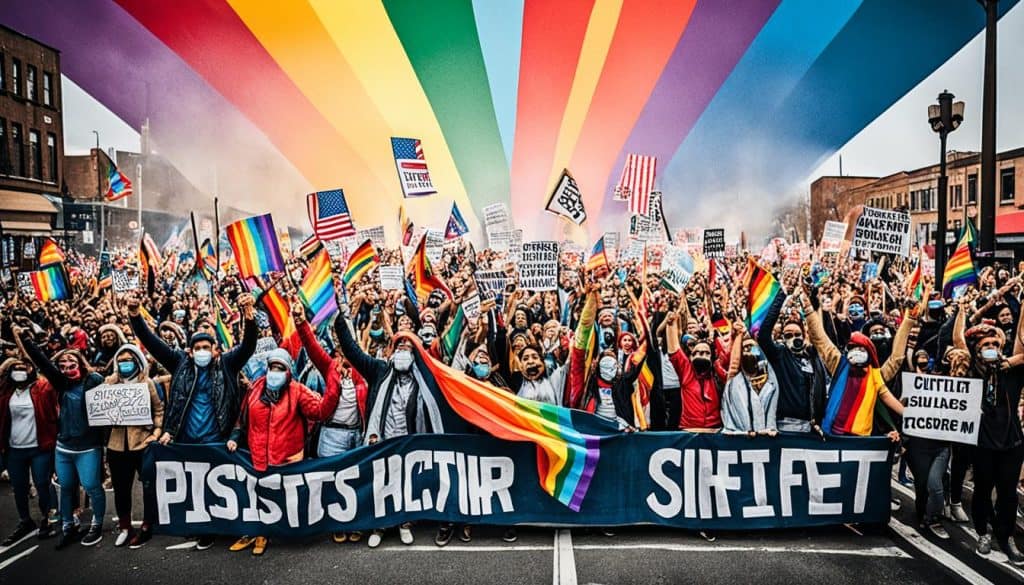
At first, “Social Justice Warrior” was a positive label. It was for those who tirelessly fought against social injustices and helped marginalized groups. This time saw more young people, especially women and white activists, getting involved. They used the SJW label to make real changes in society. Their activism was celebrated for aiming at equality, inclusion, and changing the system.
Shift to Pejorative Usage
But, in the early 2010s, things started to change. This was around the time the Obama was President. Events like the Gamergate controversy also happened. The term “Social Justice Warrior” started to be seen negatively by some on the political Right. They focused on some SJWs they thought weren’t helping. They said these activists were too divisive or too strict in their methods.
This change in how the term was used showed bigger political and online divides. Activism was no longer just in person. It was all over the internet too. Some debates caused people to choose sides. But, some on the left kept supporting the main ideas of social justice. They didn’t agree with the most extreme ways some talked about SJW ideas. This shows that activism today is complex.
Key Figures in Social Justice Activism
Influential activists have reshaped social justice. They’ve led important movements, inspiring many. These advocates for civil rights and equality showed courage and dedication. This piece shines a light on some key people who’ve made a lasting impact on justice and equality.
Dolores Huerta
Dolores Huerta co-created the United Farm Workers union with Cesar Chavez. For over 50 years, she’s been a symbol for workers’, women’s, and immigrant rights. Her tireless work has uplifted many, making her a pivotal figure in activism.
Malala Yousafzai
Malala Yousafzai stands for the right to girls’ education worldwide. Despite threats in Pakistan, her advocacy didn’t stop, leading her to win a Nobel Prize. She’s the youngest winner, proving that steadfast dedication can truly make a difference.
Harvey Milk
Harvey Milk was a pioneer for LGBTQ+ rights. As one of the first openly gay officials in the U.S., he worked to advance LGBTQ+ rights in San Francisco. His life and death emphasized the struggle for equality, marking him as a key figure in the movement.
Challenges Faced by Social Justice Warriors
Social justice warriors tackle many activism obstacles for equality. They often face backlash from groups trying to weaken their efforts. People pushing for change are called names like “keyboard warriors” or “SJWs.” This makes the fight for progress tough.
Systemic inequality is a big problem they must deal with. The World Inequality Database reported in 2022 that income gaps are growing. The difference between the lowest 50% and the top 10% incomes nearly doubled in two decades. Also, the world’s richest 1% got $42 trillion of new wealth from December 2019 to December 2021. The rest of the people only got $16 trillion.
Gender pay gaps show the barriers to equality. In the US, women make about $0.82 for every dollar a man makes. Black women earn $0.63, and Hispanic/Latina women make $0.58 for each dollar earned by men. These issues show the bigger problem of systemic inequality that social justice advocates face.
The term “social justice warrior” also causes problems. It became well-known during the 2014 Gamergate controversy. Male gamers harassed and threatened women in the gaming industry. This event showed the hate and misunderstanding towards social justice movements, like Black Lives Matter.
With a few rich people benefiting a lot from income inequality, fighting for social justice is vital. It ensures everyone has a decent life. The recent UN report on climate change shows the need to cut global greenhouse emissions by 2030. This is to prevent damage that could affect billions and increase inequalities.
In the end, social justice warriors face a hard battle. They deal with big economic differences, systemic inequalities, and much opposition. Their work requires a lot of strength and determination to make society fairer for everyone.
Social Justice in Modern Times
In our fast-paced world, social justice is evolving due to tech advances. Digital platforms bring those who fight for fairness into the spotlight. Now, their calls for equality are louder than ever.
Role of Social Media
Social media stands as a mighty champion in the social justice battle. It lets activists reach out far and wide, from Twitter to Instagram. This has reshaped how we protest and call for change, touching lives across the globe.
Notably, campaigns on these platforms can instantly gather support and spread critical messages. They unite people from different walks of life for a common cause. This shows the true power of connecting online for social change.

Impact of Hashtag Activism
Hashtag Activism, a big part of Digital Activism, really changes things. Campaigns like #BlackLivesMatter and #MeToo have sparked huge movements. They put serious issues right in everyone’s view, stirring up conversations.
By sharing these hashtags, people keep the issues alive in talks. This ensures important social matters are discussed widely. Such activism has even led to changes in laws and societies. It shows the impact when we all come together online.
The Future of Social Justice
The future of social justice is changing fast because of progressive movements. Technology is now a big part of how activists push for change. The fight for social justice now includes economic, environmental, and health issues too.
Back in the 19th century, social justice started as a way to fix big wealth and social gaps. Its core ideas include access to what we need, fairness, involvement, diversity, and human rights. Now, the focus is on helping those hurt by unfair treatment based on race, gender, or money.
Advocacy evolution needs to keep up with today’s big problems. A new wave of activists, learning from the past, seeks fresh ways to make a difference. Grassroots efforts, for example, have been key in getting people together and spreading the word, leading to new laws and changes.
We’re likely to see more efforts to include and listen to those often ignored. A good 70% of people agree with the need for fairness and social justice. This shows most of us want equality. Still, not everyone agrees, which slows down progress toward a fair society.
Staying dedicated to the cause is crucial for social justice to move forward. The future of the movement depends on adopting new methods and being true to its goals. By combining lessons from the past with new ideas, progressive movements are set to shape social change in the future.
Empowering the Next Generation of Social Justice Leaders
Empowering the next generation of social justice leaders is critical. Operation Understanding DC (OUDC) has been guiding future activists since 1993. In Washington, D.C., Maryland, and Virginia, they run a Social Justice Fellowship for high school juniors.
This fellowship teaches them to fight against racism, anti-Semitism, and discrimination. They learn through activism mentorship. It also develops their social and emotional skills like self-awareness and relationship building. This ensures they are prepared and emotionally strong for their advocacy work.
The program highlights the need for self-care, teaching “resting for the resistance.” It’s essential for activists to stay mentally and physically healthy for long-term work. The fellowship has three phases: Understanding History, Living History, and Making History.
These stages take fellows from self-exploration, to immersive learning, and finally leadership development. Graduates are ready to fight discrimination and educate others. They combine community engagement with leadership.
For younger children, learning about social justice is impactful. Studies show such education fosters trust, responsibility, and resilience. It also boosts critical thinking skills.
This helps kids analyze info and tackle society’s challenges. Encouraging empowerment early means they’re more likely to make a difference in their communities and the world.
