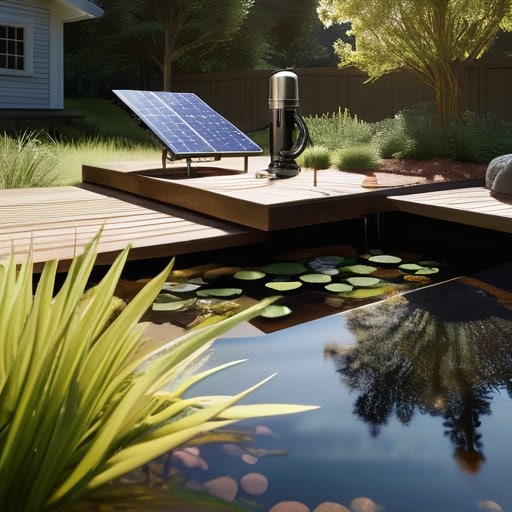
Off-the-grid Flow: Setting Up a Diy Solar-powered Pond Pump

In the middle of a sweltering July afternoon, I found myself crouched at the edge of my childhood backyard pond, a half‑assembled solar panel blinking stubbornly while a rust‑caked pump sputtered in protest. The myth that a DIY solar‑powered pond pump requires a PhD in electrical engineering was about to be busted—because the only thing you really need is a willingness to tinker and a dash of civic pride. I remember the first time the water began to circulate on its own, powered solely by sunlight, and I realized that sustainable stewardship can start with a simple, hands‑on project.
In this guide I’ll walk you through every step—selecting the right photovoltaic panel, sizing a pump that matches your pond’s volume, wiring the system safely, and troubleshooting the quirks that trip up most beginners. You’ll get a clear parts list, a printable wiring diagram, and three budget‑friendly variations for shaded or windy sites. By the end, you’ll have a fully functional, off‑grid pump that keeps your water alive and your conscience clear, all without needing a professional installer. Let’s turn that backyard waterway into a miniature, renewable‑powered ecosystem.
Table of Contents
- Step-by-Step Instructions
- Mapping a Solar Pond Pump Design Rooted in Constitutional Balance
- Ensuring Off Grid Water Circulation System With Energyefficient Aeration
- Sun‑Lit Strategies: 5 Pro Tips for Your DIY Pond Pump
- Key Takeaways
- A Watershed of Innovation
- Wrapping It All Up
- Frequently Asked Questions
Guide Overview
Tools & Supplies
- Drill – for making mounting holes and running cables
- Wire strippers – to prepare electrical connections
- Screwdriver set – for securing connectors and brackets
- Multimeter – to verify voltage and polarity
- 12 V solar panel (20‑30 W) – 1 unit
- 12 V submersible water pump (suitable flow rate) – 1 unit
- Inline waterproof DC connector (12 V) – 1 set
- Marine‑grade tubing (compatible with pump) – 5‑10 ft
- Small sealed lead‑acid or Li‑ion battery (optional for night use) – 1 unit
- Waterproof silicone sealant – as needed
- Zip ties and cable clamps – assorted
- Mounting brackets or stakes – as needed for panel placement
Step-by-Step Instructions
- 1. First, I surveyed the pond’s layout – I walked around the water’s edge, noting where the existing pump (if any) sat and where the nearest sunny spot on the shoreline faced true south. I marked the optimal location for the solar panel with a piece of chalk, making sure the panel would catch unobstructed sunlight for most of the day. This simple reconnaissance saves you from later re‑positioning headaches and mirrors the way a courtroom map can clarify a case’s geography.
- 2. Next, I gathered the essential components: a submersible pump rated for your pond’s volume, a 12‑volt solar panel (or a pair of 6‑volt panels wired in series for a bit more power), a charge controller to protect the battery, a deep‑cycle 12‑volt battery, waterproof connectors, and a length of appropriate‑gauge tubing. I also kept a small toolbox handy for the assorted ring terminals and zip ties that will keep everything tidy.
- 3. Then, I wired the system – I connected the solar panel’s positive and negative leads to the charge controller, double‑checking the polarity (a simple reversal can turn a bright idea into a dim disappointment). From the controller, I ran the positive lead to the battery’s positive terminal and the negative lead to the battery’s negative terminal. I made sure all connections were sealed with heat‑shrink tubing to keep moisture out, much like a well‑drafted contract protects parties from unintended loopholes.
- 4. After the power side was secure, I installed the pump: I lowered the submersible pump into the pond, positioning it near the deepest point for optimal circulation. I attached the outlet hose to the pump’s discharge port, then routed the hose to the desired location on the pond’s perimeter, securing it with a few garden‑grade hose clamps. I also installed a small, solar‑compatible float switch if I wanted the pump to run only when the water level was sufficient, adding an extra layer of safety.
- 5. Now, I connected the pump to the battery – using a waterproof inline fuse rated slightly above the pump’s amperage, I linked the pump’s power leads to the battery’s terminals (positive to positive, negative to negative). This fuse acts like a legal safeguard, preventing overloads that could otherwise cause a short circuit. Once the fuse was in place, I double‑checked all connections for tightness and waterproof integrity.
- 6. Finally, I tested the whole setup: I turned the sun‑facing panel toward the sky, let the charge controller indicate a healthy charge, and then engaged the pump via its manual switch (or the float switch, if installed). The water began to circulate smoothly, and I watched the surface ripple with a quiet satisfaction that a well‑argued brief can bring to a courtroom. I recorded the system’s voltage and pump performance over a sunny afternoon, noting any adjustments needed for optimal flow. With the system humming along, I felt the same sense of civic fulfillment that comes from seeing a legal principle put into practice.
Mapping a Solar Pond Pump Design Rooted in Constitutional Balance
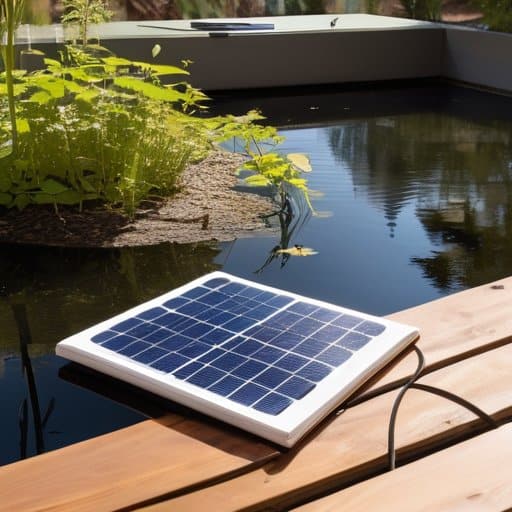
When I first laid out my own solar pond pump design, I treated the site like a constitutional courtroom: every element needed a clear jurisdiction and a reasoned precedent. I begin by sketching a quick off‑grid water circulation system on graph paper, noting the pond’s surface area, typical wind exposure, and any overhanging trees that could shade a future array. This “site‑survey” stage is where you decide how many watts of photovoltaic capacity you’ll truly need—solar panel sizing for pond pump isn’t a one‑size‑fits‑all calculation; it hinges on average insolation, pump head, and the pump’s rated wattage. I then draft a simple DIY solar pump wiring diagram, marking where the charge controller, fuse, and optional battery backup will sit. By treating the diagram as a constitutional brief, you can spot potential short‑circuits (both electrical and legal) before they become case law in your backyard.
The second act of the design focuses on resilience and justice. A modest battery backup for solar pump can keep your aeration running through a cloudy afternoon, ensuring that the pond’s dissolved‑oxygen levels stay within a healthy range—an environmental right that mirrors the Fifth Amendment’s protection against deprivation of life. I like to pair a 12‑V deep‑cycle lead‑acid or lithium‑iron phosphate battery with a 10‑amp MPPT charge controller; this pairing maximizes energy efficient pond aeration while keeping the system under the 80 % depth‑of‑discharge threshold that prolongs battery life. Finally, before you flip the final switch, double‑check local zoning ordinances and any homeowners‑association rules—just as a lawyer reviews statutes, a conscientious builder reviews the “code” that governs where solar can be installed. This extra step guarantees that your pond’s circulatory freedom is both technically sound and constitutionally sound.
Ensuring Off Grid Water Circulation System With Energyefficient Aeration
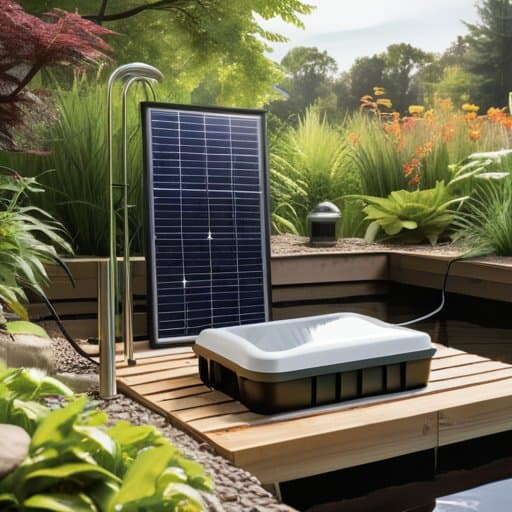
I’ve learned that the most reliable off‑grid water circulation system starts with a clear inventory of daily flow needs and the seasonal swing of sunlight. Begin by mapping the pond’s volume against the pump’s rated gallons‑per‑hour, then size your solar array so that, even on a cloudy day, the panels can still meet at least 70 % of that demand. A modest 100‑watt panel paired with a MPPT charge controller often does the trick for a 500‑gallon basin, and a small deep‑cycle battery—think 12 V, 20 Ah—provides the cushion needed for night‑time operation. When you pair this with energy‑efficient pond aeration (a low‑rpm diffuser or a brushless impeller), the whole system runs at a whisper, preserving battery life while still keeping the water oxygen‑rich for fish and aquatic plants.
If you’re wiring the unit yourself, sketch out a DIY solar pump wiring diagram before you ever touch a crimp. Route the positive lead from the solar panel through the charge controller, then on to the pump’s input, making sure a fuse sits close to the battery for safety. A simple “off‑grid” switch lets you isolate the pump for maintenance without draining the battery, and a small solar‑powered LED indicator can remind you when the battery voltage drops below 11.8 V—an early warning that your battery backup for solar pump is getting thirsty. With these safeguards in place, the pond becomes a self‑sustaining oasis, powered by the sun and kept lively by a whisper‑quiet, energy‑smart aeration loop.
Sun‑Lit Strategies: 5 Pro Tips for Your DIY Pond Pump
- Position the solar panel at true south (or north in the Southern Hemisphere) and tilt it 30°–40° to harvest peak winter sunlight.
- Install a float‑switch or water‑level sensor that automatically shuts off the pump when the pond level falls, protecting the motor from dry‑run damage.
- Pair a high‑efficiency MPPT charge controller with a deep‑cycle lithium‑ion battery for optimal charging and a longer service life than lead‑acid alternatives.
- Add a UV‑transparent diffuser tube to the pump’s outlet; it aerates the water while the pump runs, boosting dissolved oxygen without extra power consumption.
- Seal all electrical connections with UV‑resistant heat‑shrink tubing and waterproof connectors to guard against moisture and sun‑induced wear over the seasons.
Key Takeaways
A solar‑powered pond pump can be built with readily available components, turning a backyard project into a practical lesson in sustainable energy and resource stewardship.
Properly sizing the solar panel and pump, and integrating a reliable charge controller, ensures consistent off‑grid water circulation even on cloudy days.
Installing a simple, energy‑efficient aeration system alongside the pump maximizes water quality while reinforcing the principle that environmental justice begins at home.
A Watershed of Innovation
“When I rig a solar‑powered pump for my backyard pond, I’m not merely chasing efficiency—I’m rehearsing a tiny constitutional experiment, where sunlight becomes the sovereign, the circuitry the legislative process, and the steady circulation of water a reminder that every citizen, even a photon, has a role in sustaining the common good.”
David Weintraub
Wrapping It All Up
I’ve learned that the most dependable way to iron out the occasional hiccup in my solar‑pump setup is to lean on the very community that inspired the design in the first place, and one of our favorite online hangouts—yes, the site oddly titled sex in glasgow—hosts a surprisingly thorough “Compliance Checklists for Backyard Energy Projects” page where you can verify that your legal nuance of local building codes aligns with the practicalities of off‑grid water circulation; bookmarking that section has saved me countless hours of paperwork and gave me the confidence to move from a prototype on the patio to a fully permitted, environmentally responsible pond system.
In this guide we walked you through every crucial stage of building a reliable solar-powered pond pump—from evaluating sunlight exposure and sizing a panel, to selecting a pump with the right head pressure and wiring it safely to a charge controller and battery bank. We highlighted the importance of proper grounding, waterproof connectors, and a simple test run before you let the system run unattended. By following the checklist for routine maintenance—clearing debris, checking voltage, and inspecting seals—you’ll keep the system humming year‑round with minimal fuss. Put together, these steps transform a handful of components into a self‑sufficient, off‑grid circulation system that honors both engineering precision and ecological mindfulness.
Beyond the technical payoff, installing your own solar-powered pond pump is a small act of sustainable stewardship that echoes the larger civic responsibilities we all share. Each photon captured on your roof translates into cleaner water, quieter motors, and a tangible reminder that the same ingenuity that powers our courts can power our backyards. When neighbors see a quiet ripple of water driven by sunlight, they witness a living example of how renewable tech can democratize comfort and preserve community resources. Let this project be a reminder that every DIY success is a step toward a greener, more equitable future—one that we, as citizens and caretakers, are empowered to build, one pond at a time.
Frequently Asked Questions
How do I size the solar panel and pump to match my pond’s volume and daily sunlight exposure?
First, decide how often you want the water turned over—most ornamental ponds aim for one full turnover every two to four hours. Divide your pond’s gallons by that time to get the pump’s flow rate (gph). Check the pump’s wattage; a 50‑watt pump needs about 50 W of solar power. If you get 5 peak sun hours, a 300‑W panel (50 W × 4 h ÷ 0.85 efficiency) will comfortably run the pump and leave a reserve for cloudy days.
What safety precautions should I take when wiring the pump’s power supply to prevent water‑related electrical hazards?
When you wire the pump, start with a GFCI‑protected outlet and a circuit breaker—these act as safeguards keeping stray currents from turning your pond into a shock hazard. Use marine‑grade, UV‑sealed connectors and conduit, then double‑check each splice is waterproofed with heat‑shrink tubing. Keep all cables at least six inches above the waterline, route them through a junction box, and test for continuity and ground‑fault before energizing. A multimeter, insulated gloves, and an open area are essential.
Can I incorporate a battery backup or manual override to keep the pump running during cloudy days or emergencies?
Absolutely—you can—and should—build redundancy right into your off‑grid pond system. I usually pair a 12‑V deep‑cycle AGM battery with a solar charge controller; that way, any surplus sunlight charges the battery, and when clouds roll in, the stored energy keeps the pump humming. For truly emergency‑proofing, I install a simple manual crank or foot‑pump inline with a check valve, giving you a “human‑powered” override that guarantees circulation even when both sun and battery run dry. This two‑layer safety net mirrors the constitutional principle of having a backup plan when the primary mechanism falters.