
Housing Crisis: Seeking Solutions for Affordable Living

Did you know the U.S. is short of about 300,000 housing units each year? This huge gap shows how big the housing crisis is. It affects how affordable and available homes are. From 2011 to 2020, the SHOP program built homes in over 40 states. But, rising land prices, up 60% since 2012, have made cheap housing harder to find.
Innovative solutions have become essential now more than ever. The Ivory Prize focuses on housing affordability, shining light on innovators. These people are working hard in housing, through policies, business, and community action. Every year, this prize encourages talks on how to solve the affordability issue.
The cost to buy a home has more than doubled recently. And, rents went up by about 24% in the last three years. This increase is tough on low-income families who can’t afford rent. As of March 2022, about 2,200 rental units were funded by the Housing Trust Fund. But, sticking to HUD’s rules has been a challenge for many.
The crisis in housing affordability needs our attention now. Innovations can help, from new building methods to better policies. We can close this gap. This way, every American can find a home they can afford.
Understanding the Housing Crisis and Its Impact
The affordable housing crisis in the United States is getting worse every day. More people are moving to cities, making homes in demand. Yet, high prices make the real estate market hard to access.
Prices are high because of investment and speculation. This makes finding a home tough for many.
Current State of Affordable Affordable Housing
With wages not going up and living costs rising, getting a home is tough. To afford a modest two-bedroom apartment, a worker needs to earn $25.82 an hour. This is much more than the minimum wage.
The building of new affordable homes is slow because land and building are expensive. Zoning laws and other rules also limit new housing. This problem affects cities and rural areas nationwide.
Impact on Low-Income Families
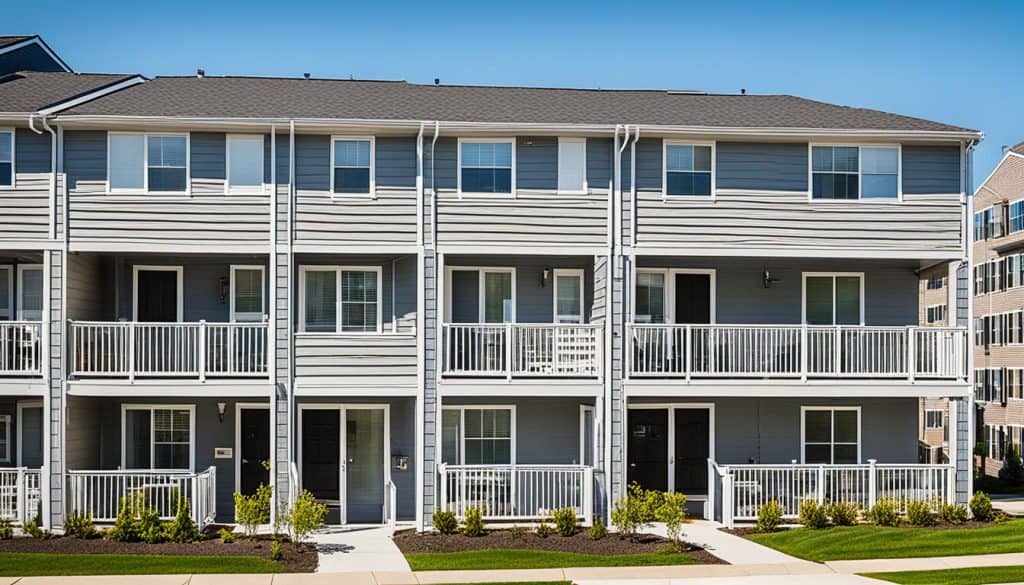
Low-income families are hit hardest by the lack of affordable homes. Gentrification pushes them out of their neighborhoods. About 70% of these families spend most of their income on rent, making life harder.
Many must live far from work, making commutes long and costly. Over 580,000 people are homeless each night. The high cost of housing creates a cycle of poverty.
Role of Real Estate Market Dynamics
The real estate market has a big role in this crisis. Home prices have risen 30%, while incomes only went up 11% since the pandemic. Rents have also jumped by 18%.
Government actions can help fix these problems. They can fund affordable housing, encourage developers to build, and protect renters. Changing zoning laws to allow more homes could help too.
In conclusion, fixing housing insecurity needs many steps. It requires changes in the economy, laws, and community efforts. If we work together, we can make housing more accessible for all.
Removing Regulatory Barriers to Increase Housing Supply
The housing crisis in America worsens due to regulatory barriers. This slows down the creation of new homes. Up for Growth’s report from 2022 shows the U.S. needs 3.89 million more homes. Regulatory issues can hike up costs for building apartment complexes by as much as 41% and also cause delays.
Local, State, and Federal Initiatives
Efforts are being made across various government levels to tackle these obstacles. The Reducing Regulatory Barriers to Housing Act focuses on cutting costs and streamlining building procedures. With a national shortage close to four million housing units and Pennsylvania alone needing 100,000 more, this act is essential. It has the backing of over 115 groups, like the American Planning Association and National Apartment Association.
Case Studies: Minneapolis and Oregon
Minneapolis and Oregon have made bold changes to zoning laws, which helps increase housing availability. Minneapolis led by ending single-family zoning. This allows for more accessory dwelling units and apartments. Similarly, Oregon stopped single-family zoning in towns of more than 10,000 people. These steps are key to offering more housing choices and addressing demand.

Innovations like Symbium in San Francisco
In San Francisco, a new approach using computational law is making a difference. Symbium helps with housing by speeding up some of the legal work. Its technology can greatly shorten the time to get housing projects approved. This has been a big help in building affordable homes more quickly. Symbium proves how tech can help jump through regulatory hoops and put housing laws into action faster.
Innovative Solutions to Build Faster and Cheaper
We need new ways to solve the affordable housing crisis. Using off-site construction, modular homes, and advanced technology cuts down costs and time. It makes building homes more efficient and cheaper.
Off-Site Construction and Productivity Enhancements
Building homes off-site can make things much faster. It lets work happen in two places at once, saving time and money. For example, modular housing means making parts of homes in a factory. Then, these parts are moved and put together at the home’s final location.
Entekra’s Fully Integrated Off-Site Solution (FIOSS) makes building homes much quicker. It’s five times faster than old ways. This speed means projects finish sooner and cost less. In places like California, where building is very expensive, this is a big deal.
Success Stories from Entekra and FullStack Modular
Entekra and FullStack Modular show how well modular homes can work. FullStack Modular made a big project in Brooklyn called 461 Dean Street. Its use of precise tech helps build good, big homes that don’t cost too much. This approach is key for making homes more affordable and better for the environment.
3D Printing and Its Potential
3D printing is also changing how we build. Companies like New Story Charity and ICON use it to make homes fast and cheap. This method lowers the cost for materials and labor a lot. It’s a strong new way to make homes more affordable and help reduce homelessness.
In the end, using new technologies and building off-site offers great hope. They could make housing more affordable and available. It’s a smart way forward to fix the housing crisis with efficient, cheap homes.
Creative Financing and Affordable Rental Housing
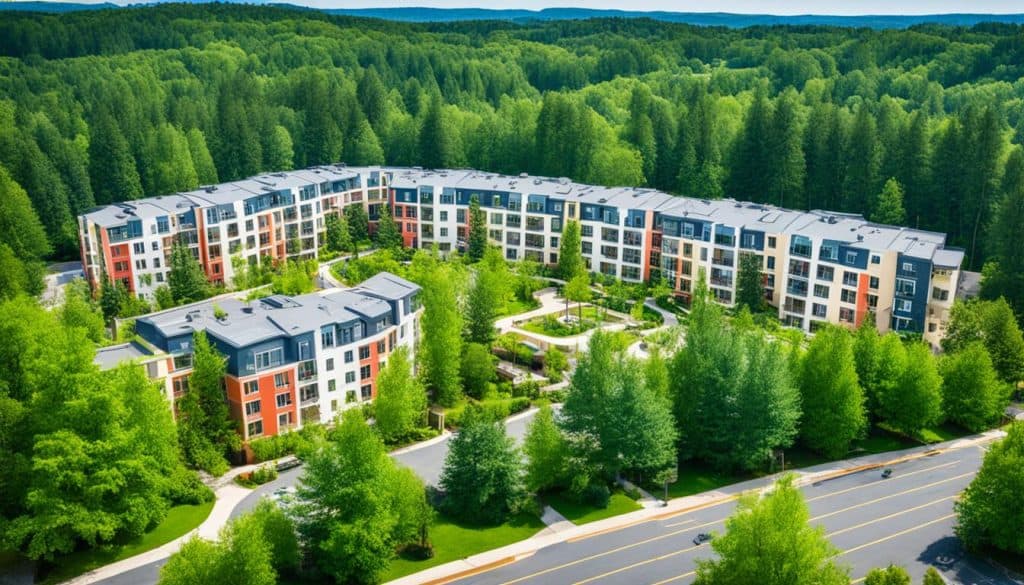
We need new ways to make financing easier and housing cheaper. Exploring options like insurance options and crowdfunding can help. This allows people to find homes without facing usual hurdles.
Insurance Alternatives and Crowdfunding
In New York City, Rhino is changing how we rent. Renters can now use insurance instead of large deposits. This is great for those who cannot afford homes due to high costs.
Crowdfunding sites like HomeFundIt let people collect money for down payments together. It opens the door to homeownership for more people. Friends and family can help you buy a home easier this way.
Success Stories: Rhino and HomeFundIt
Rhino and HomeFundIt have great success stories. Rhino saves renters a lot of money on initial costs. HomeFundIt helps people raise money for homes.
Small Change focuses on helping communities fund affordable homes. It helps lower-income families by addressing the housing crisis. 65% of lower-income renters spend more than half their income on rent.
Role of Public Policy in Supporting Affordable Housing
Government policy supports creative financing for cheaper homes. Programs like the HUD Homeownership Program are important. They help increase the number of affordable homes for renters.
The American Rescue Plan Act added over $40 billion to housing in 2021. The Affordable Housing Credit Improvement Act proposes even more funding. These efforts are crucial for making homes more available.
Utilizing Existing Housing and Land More Effectively
Making better use of current housing and land can change the housing crisis landscape. Innovative ideas like shared living spaces and repurposing properties can boost low-cost housing. Companies like Starcity in San Francisco show how co-living can add more homes in cities. Nesterly in Boston, meanwhile, pairs students with affordable rooms in seniors’ homes. This offers students lower rent and gives income to the elderly.
Restrictive zoning laws contribute to the lack of affordable homes. In many American cities, 75% of the land is zoned for single-family homes only. This limits diverse housing options. But places like Minneapolis have made a big difference by removing those restrictions. Afterward, the city saw a surge in housing development, especially in larger buildings. By allowing more living units and smaller lots, cities can grow upwards, not outwards. This helps prevent urban sprawl and promotes sustainable living.
The Casita Coalition shows how adding units to existing properties can tackle the housing crunch. Repurposing unused and surplus land is also key in dealing with the 3.8 million home shortage. By supporting shared living and updates to zoning laws, we can make housing more affordable. These efforts lead to more welcoming and fair cities for everyone.