
Corporate Ethics: Balancing Profit and Responsibility

Did you know companies focusing on corporate social responsibility (CSR) can boost their brand reputation by nearly 60%? This amazing fact highlights the importance of corporate ethics in today’s market. Now more than ever, everyone expects businesses to act ethically.
Companies today have to juggle making money with having a positive impact. Profits drive innovation and growth but there’s a shift towards value-driven business models. All stakeholders now demand that businesses not only make money but also take care of social and environmental issues.
There’s a real challenge in balancing quick profits with goals that ensure long-term sustainability. Young people like millennials and Gen Z want to work for companies that share their values. Also, having a good ethical reputation makes consumers more likely to support a brand.
When it comes to global supply chains, things get tricky with ethical sourcing and responsible management. But, integrating corporate social responsibility into business plans can help. It narrows the gap between making profits and achieving societal goals, which benefits both humanity and the earth.
The Importance of Corporate Ethics in Modern Business
The business scene is changing. It now values corporate ethics along with profit. Companies are now looking at the impact they have on society too. They’re making ethical behavior, sustainability, and stakeholder engagement parts of their plans. By doing this, they build a strong brand and earn the loyalty of customers, which helps them grow sustainably.
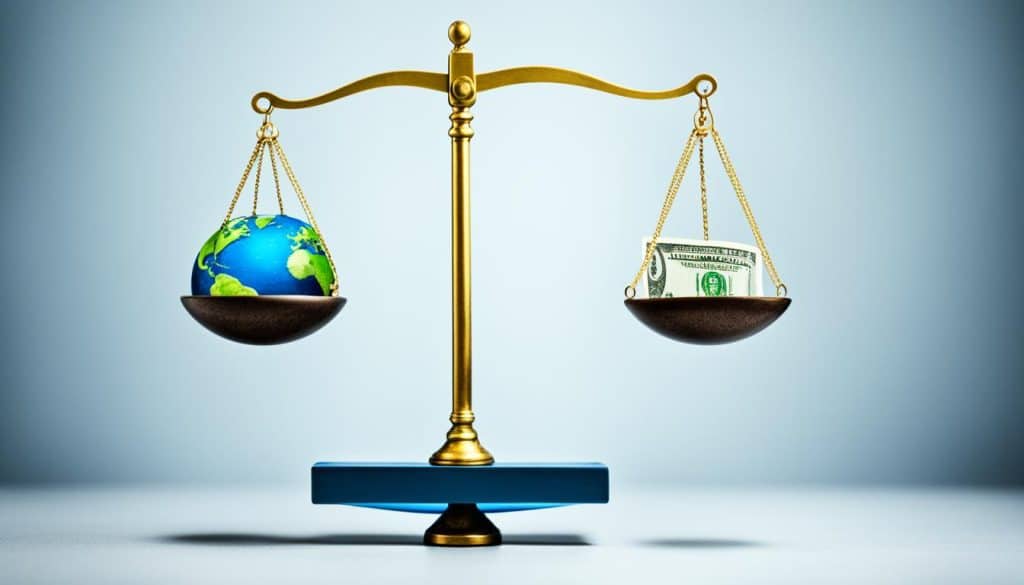
The Pursuit of Profit: Why It’s Essential
Profit is still key for businesses. Yet, adding ethics to the pursuit boosts finances. The 2021 World’s Most Ethical Companies list shows ethical companies did better than others financially. They beat the Large Cap Index by 10.5 percent in three years. It proves that ethics can go hand in hand with making money and helping society.
The Rise of Purpose-Driven Business
There’s a big move towards businesses that care about more than profits. Over half of American shoppers avoid brands that don’t act ethically. And three in 10 will praise ethical companies online. This highlights the need for companies to be sustainable and considerate in their dealings with everyone involved.
Ethical Dilemmas in Business Practices
Today’s companies often face tough ethical decisions. A 2018 survey showed less than a quarter of U.S. workers think their companies manage ethics well. Another survey in 2023 found 65% of employees saw at least one unethical act at work in the past year. Successful businesses tackle these issues by creating an ethical culture and taking their responsibilities seriously. Being transparent and committing to integrity helps avoid ethical issues, builds trust, and improves their reputation.
Strategies for Balancing Profit and Eth that incorporate both aical Business Practices
Modern businesses face the challenge of blending profit with ethics. Adopting ethical strategies and understanding how to make decisions can help achieve this balance. Below, let’s explore ways to maintain both profitability and ethical integrity.
Defining a Clear Purpose
Starting with a clear purpose is key. Initiatives driven by a purpose help businesses focus on sustainability. This ensures everyone knows and supports the company’s ethical direction.

Engaging Stakeholders in the Decision-Making Process
It’s important to involve stakeholders in decisions. Having open discussions builds a united front for ethical goals. This approach shows the company is serious about its ethical promises.
Implementing Ethical Governance Mechanisms
Setting up ethical governance is a crucial step. These systems, including being transparent and accountable, blend ethical principles throughout the company. They create an environment where doing the right thing is as important as making a profit.
Measuring Impact: Financial and Social
Measuring the success of ethical actions is vital. Different tools help see if ethical efforts are meeting sustainability targets. Analyzing both financial and social outcomes shows the value of high ethical standards.
The Journal of Business Ethics (2023) looked at the Indonesian palm oil industry. Companies struggling to meet their goals had to balance environmental, social, and economic aims. Those acknowledging these challenges often led in sustainability.
These strategies show real-world impacts, including on policies. As companies strive for ethical balance, they help shape laws around corporate responsibility and combatting deforestation in places like the US and EU.
Corporate Ethics: Integrating Ethical Practices into Your Business Model
In today’s world, integrating ethical practices into your business model is a must. It’s more than being moral; it’s key for lasting success. A whopping 85% of consumers want businesses to act ethically. Yet, finding a balance between quick gains and ethical actions for future survival is tough.
Short-Term vs. Long-Term Goals
Companies face a tough choice between short-term profit and long-term growth. Chasing quick profits might ignore ethics, risking up to a 20% loss from bad behavior. On the other hand, being ethical boosts transparency and responsible supply chains, adding to sustainability. For example, Patagonia’s ethical approach increased its customer loyalty by 10%.
Transparent and Accountable Business Practices
Being open is key to gaining stakeholders’ trust. Adding ethical practices can boost customer loyalty by 15%. Google’s open and inclusive culture has even improved employee stay by 20%. A transparent company sets clear policies, trains on ethics, and sticks to accountability.
Ethical Sourcing and Supply Chain Management
Managing a supply chain ethically is central to a company’s values. It means choosing fairness, environmental care, and humane treatment in sourcing. Unilever’s focus on ethical supply chain management has cut costs by 12% and opened new markets. Such moves reduce risks and ensure business actions reflect environmental and social values.
Wrapping up, ethical practice integration into business models is crucial for stability, transparency, and responsible sourcing. This strategy creates a strong, positive impact on society.
The Role of Corporate Governance in Ethical Business Operations
Corporate governance is key in shaping how businesses operate ethically. It sets up strong governance structures. These help uphold moral principles needed for lasting success. With corporate accountability, companies become more transparent and trustworthy. This improves their reputation and connects them with their stakeholders.
Having ethical leadership from the top influences the entire company culture. It makes it easier to talk about and solve ethical issues. Making decisions with integrity is simpler with guidelines like utilitarianism and deontology. These help leaders pick paths that match the company’s values and what society expects.

Corporate governance includes codes on how to behave and ethics policies. These guidelines are for both employees and managers. The board of directors plays a big role. They make sure ethical thinking is part of making big company decisions. This focus on doing right things helps attract great employees, gain customers’ trust, and keep investors happy.
Making ethics a priority in governance reduces risks and gets employees more involved. It leads to a company that lasts longer. Transparency and honesty are a must for winning over investors and others. Business done ethically, backed by strong governance, sets a company up for continuous success and the ability to stand strong in a competitive market.
Final Thoughts on Corporate Ethics and Sustainable Success
In the fast-paced world of business, combining profit and purpose is key to success. Companies must focus on being sustainable through ethical leadership. This requires a lot of work and dedication. By being honest and open, businesses can gain the trust of customers, employees, and investors.
It’s important to mix profit with caring for society. Companies with strong ethics avoid legal issues and improve their reputation. Honesty, fairness, and respect are values that matter to everyone involved. Taking this route helps society and makes the business more stable and successful.
Warren Buffett, a famous investor, believes in the power of ethics and long-term goals. By being transparent and ethical, companies can overcome challenges. They can earn lasting trust and loyalty. In the end, adding ethics to business plans is not only right but also smart. It benefits everyone, from stakeholders to the wider community.